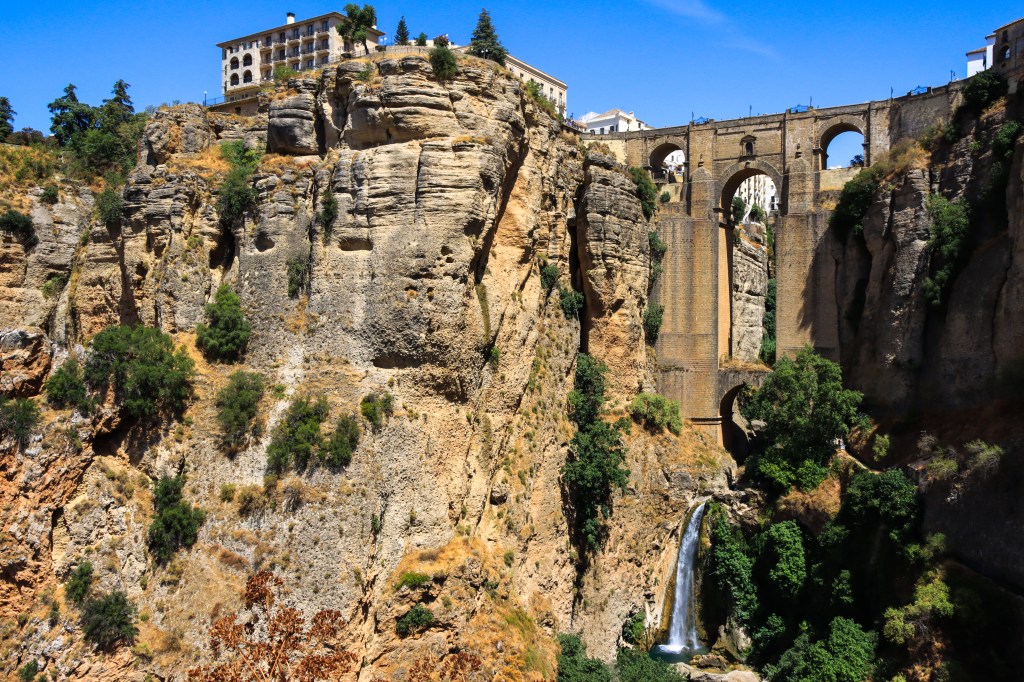
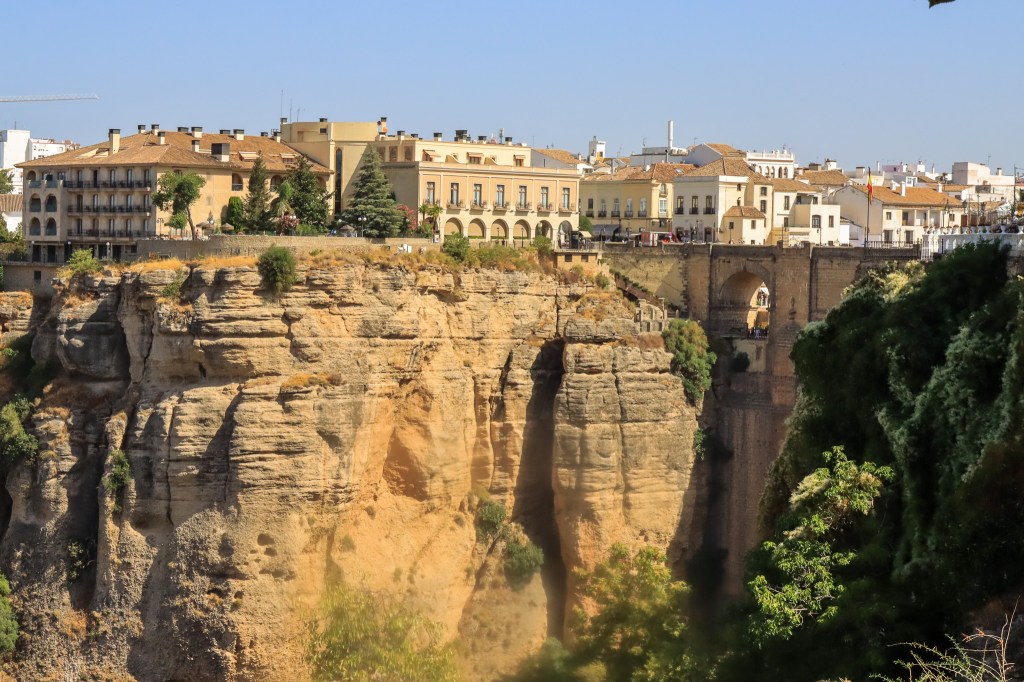
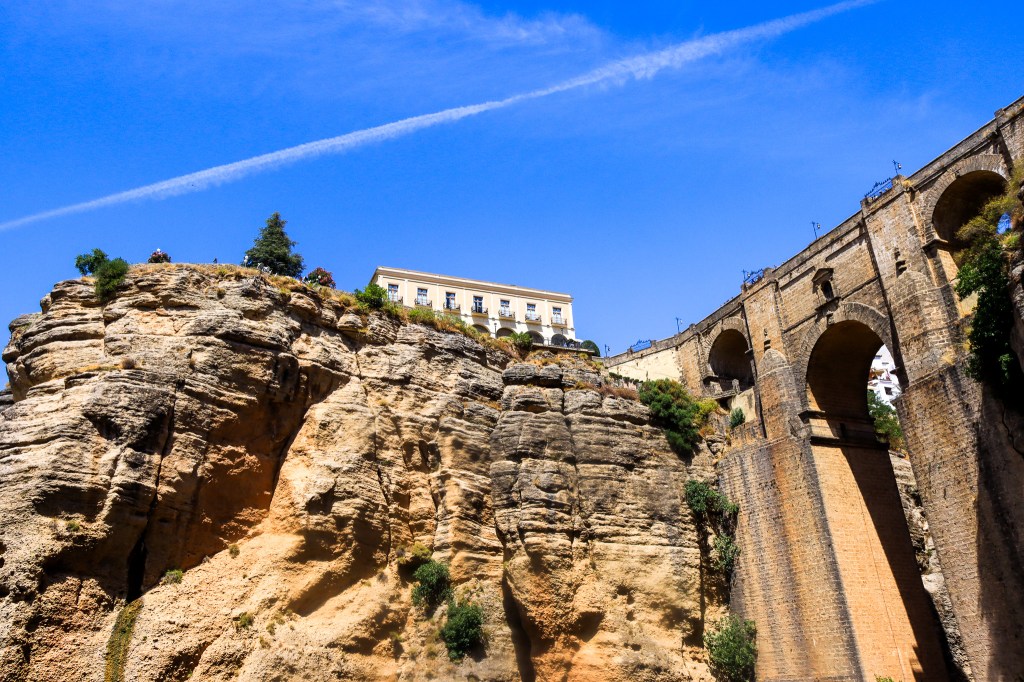
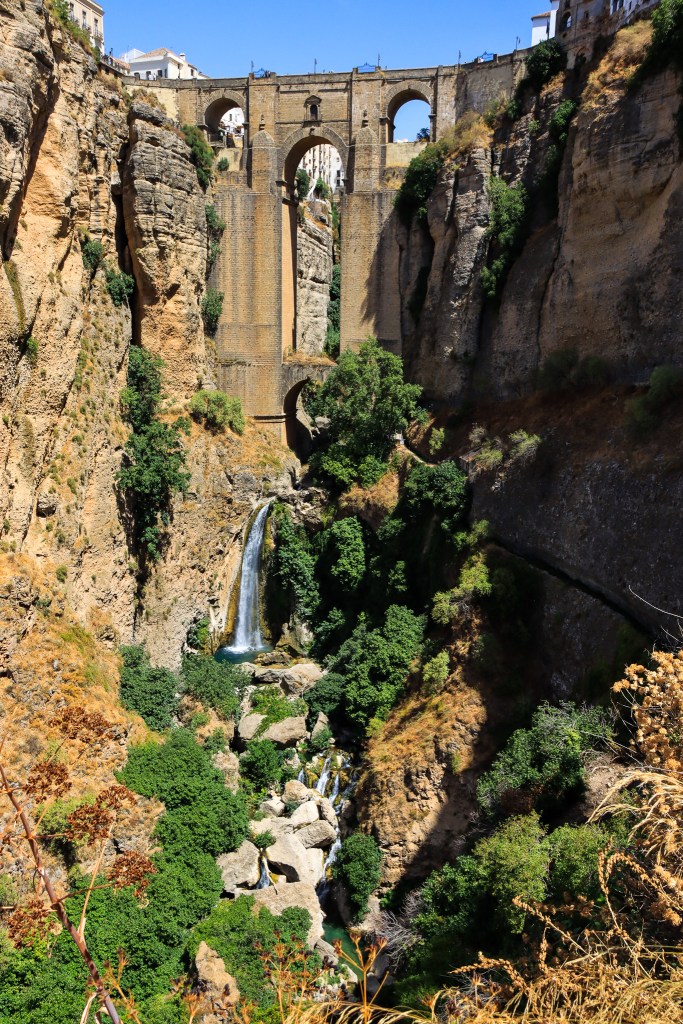
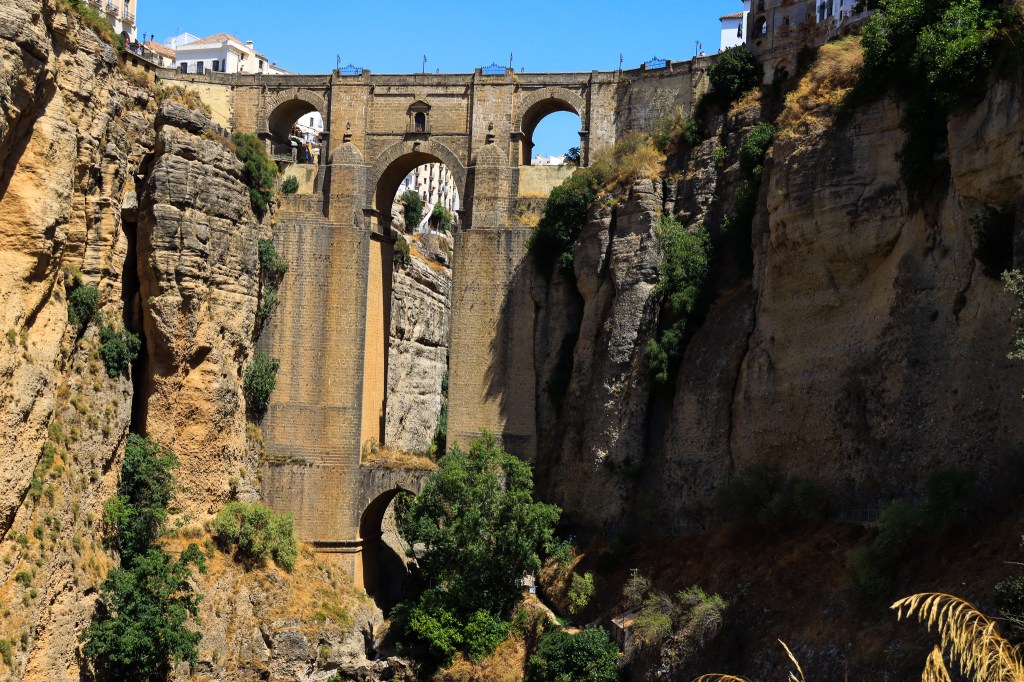
The Puente Nuevo, the New Bridge, was completed in 1793 and is one of the main sights in Ronda. It is also responsible for many of the tourists.
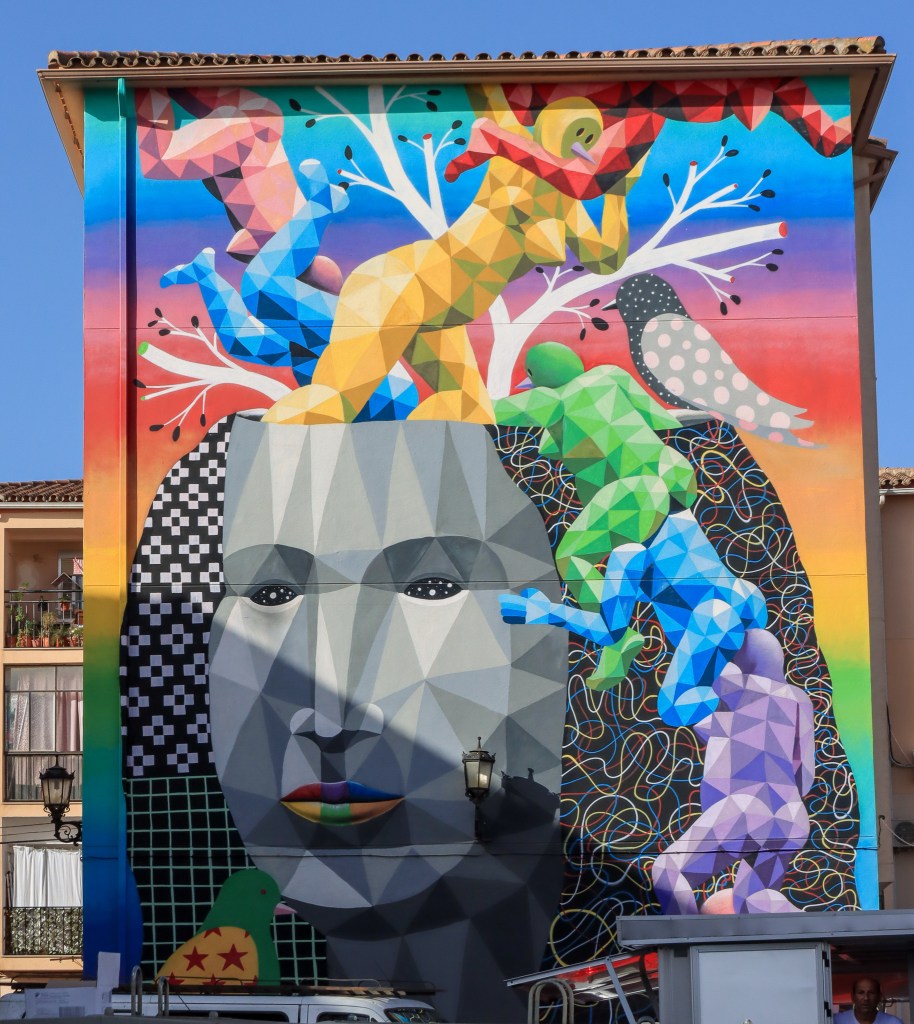
When we checked into our camp site last night we were not aware of the biggest festival of the year starting that night. It is the festival of Pedro Romero, a bull fighting legend and the festival goes for a week. We were also not aware that the silent fair ground we passed on the way in was not only next door but about to come alive in a very noisy way. Until 5 am. We did manage some sleep but could have done with more.
It was a very pleasant 2 km walk into town before the heat came in. There was a buzz from the festival and the town was done up nicely.
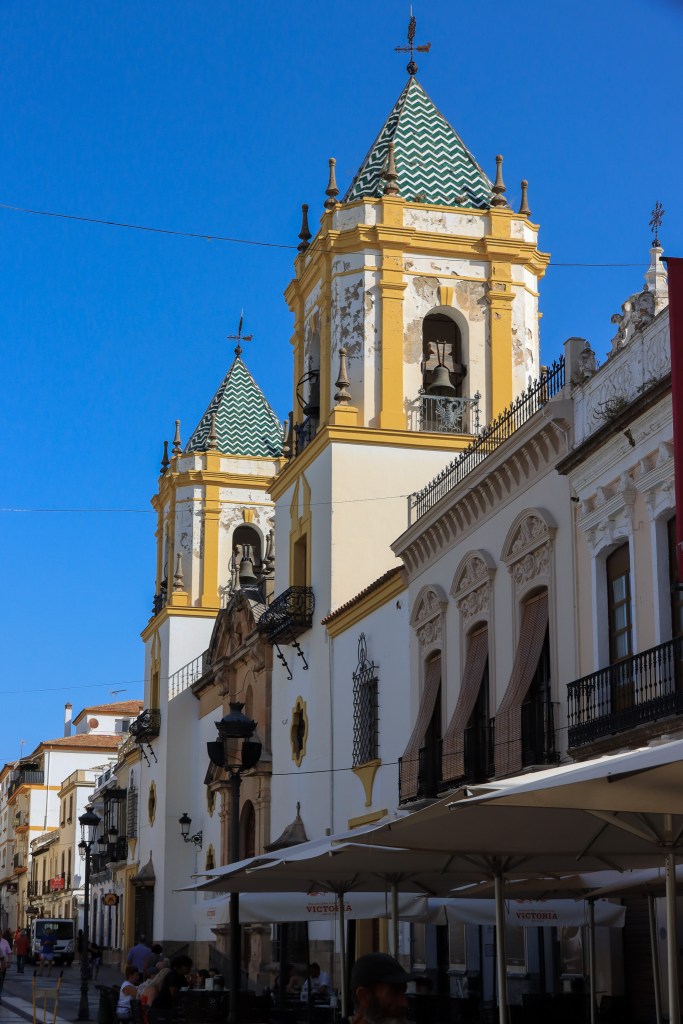
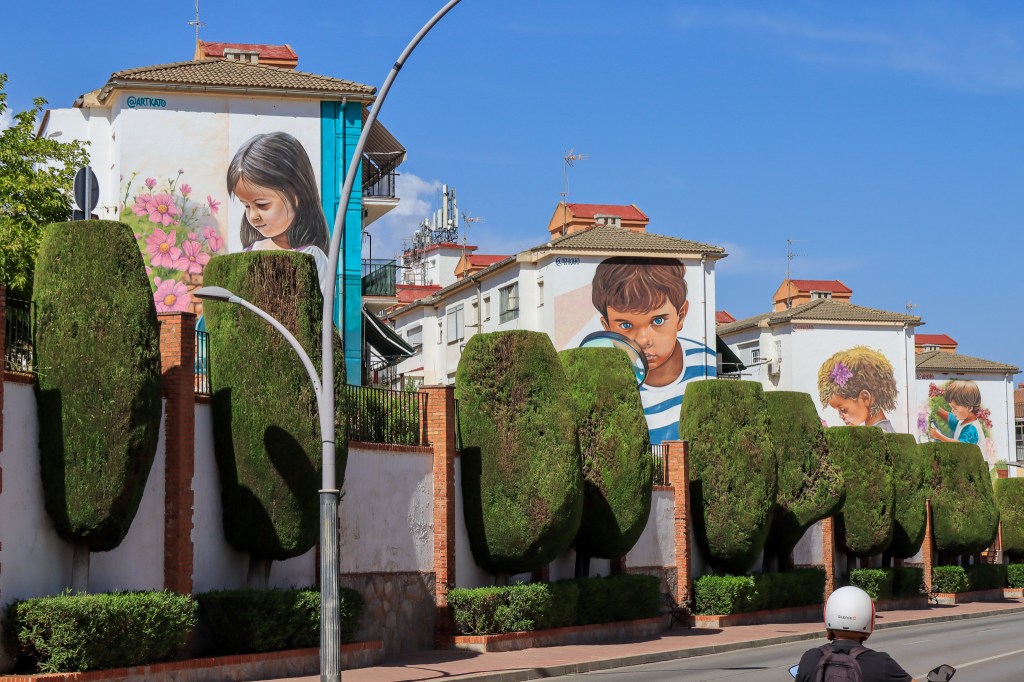
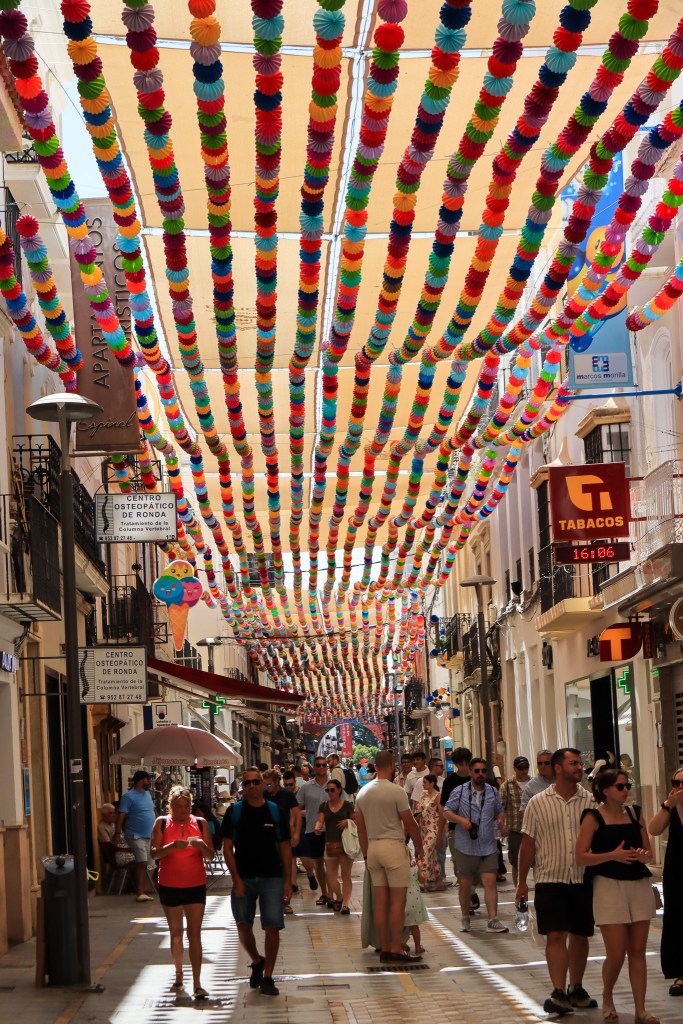
The Main Street
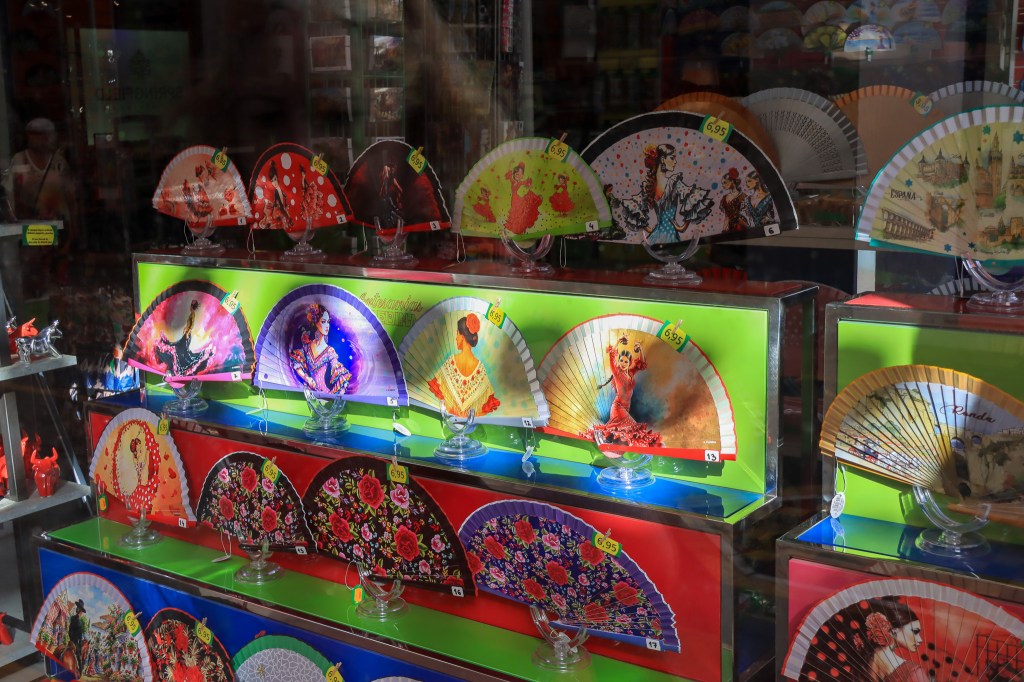
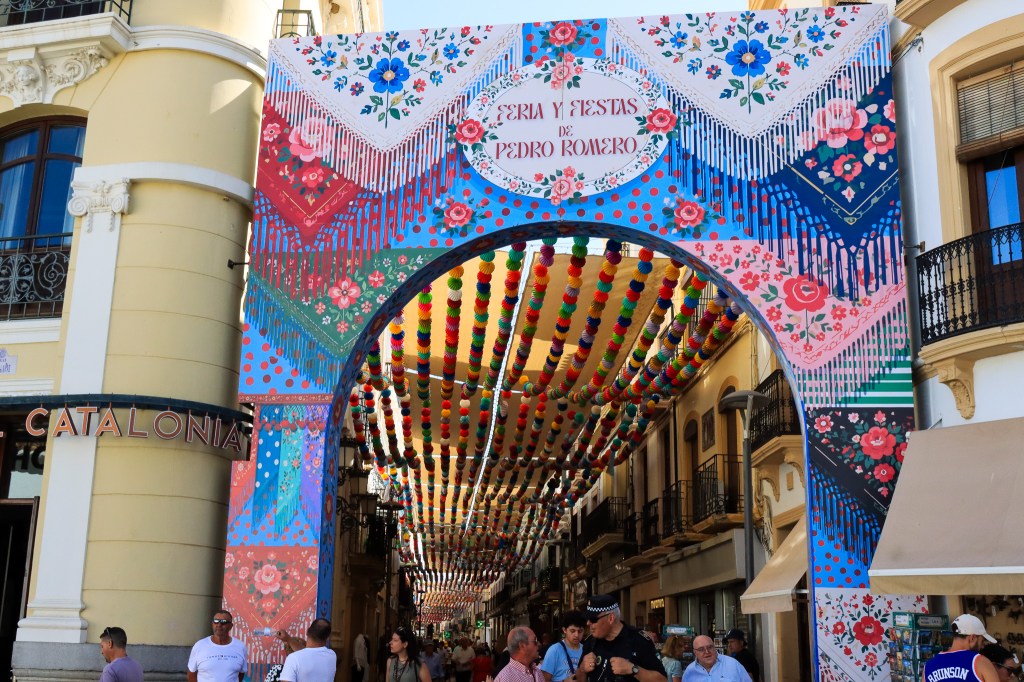
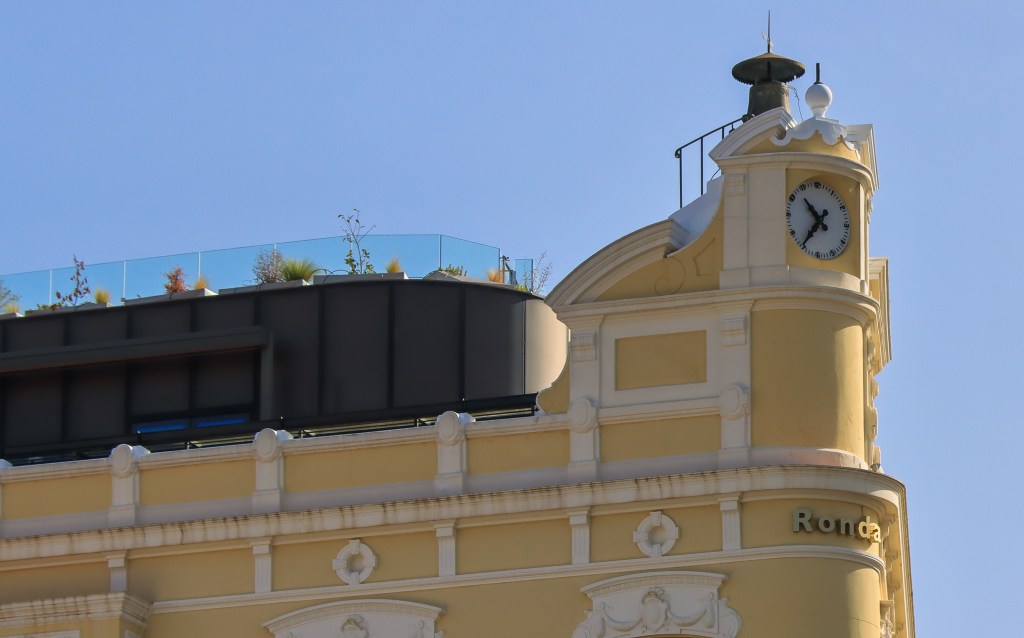
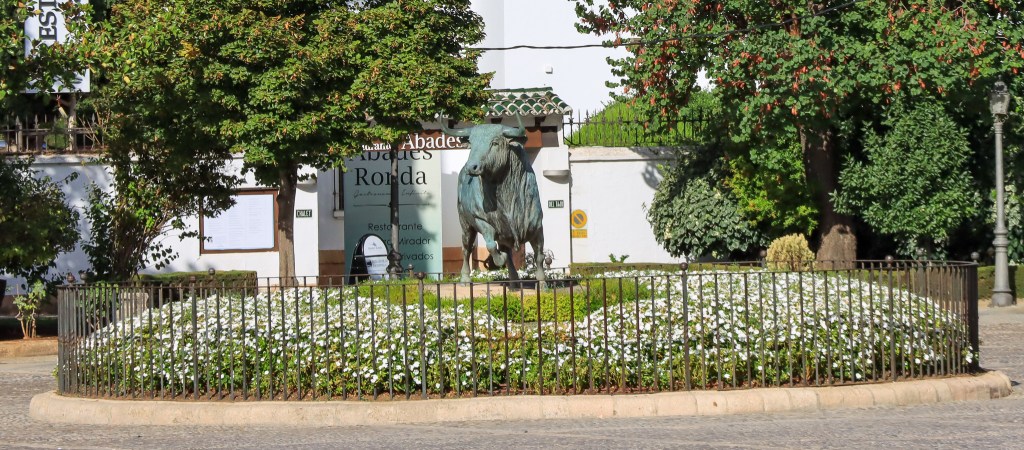
Outside the bull ring at the end of Main Street, this is the only one left standing.
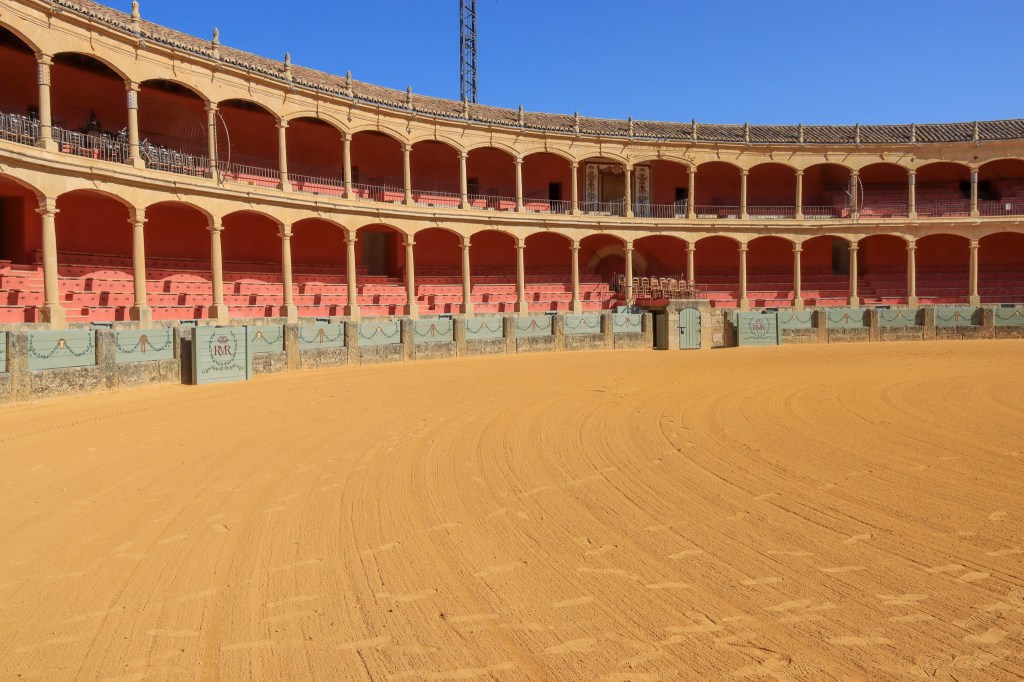
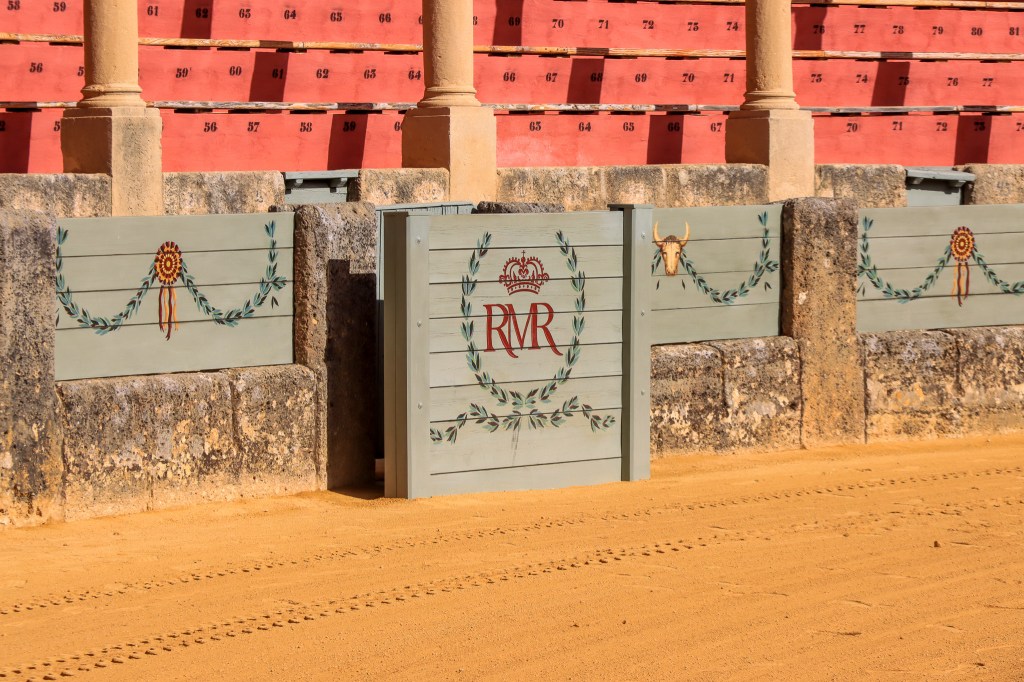
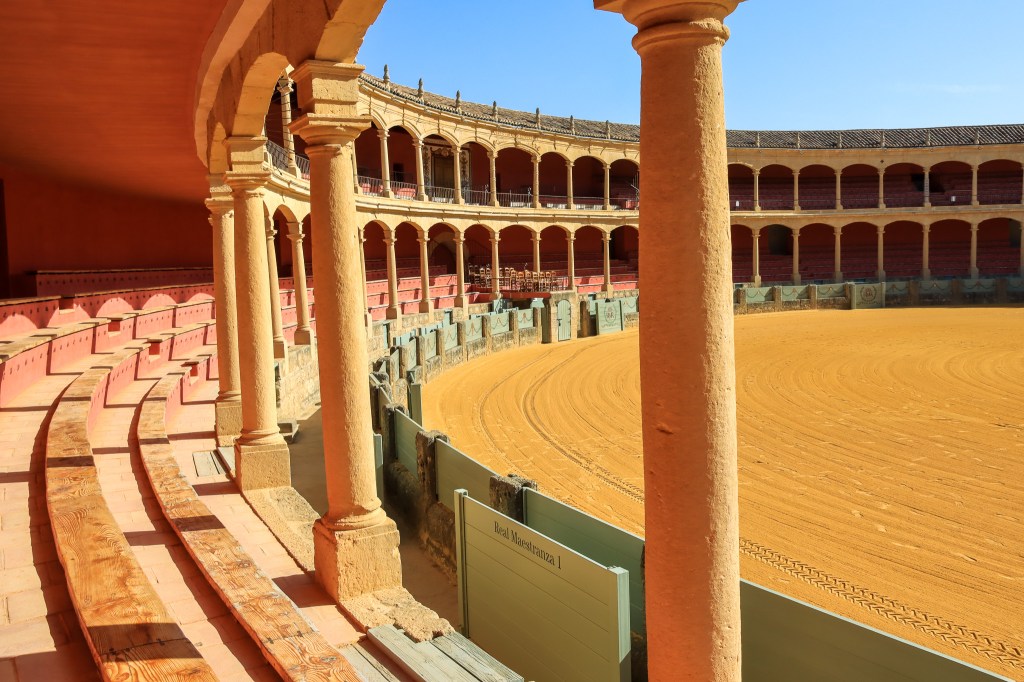
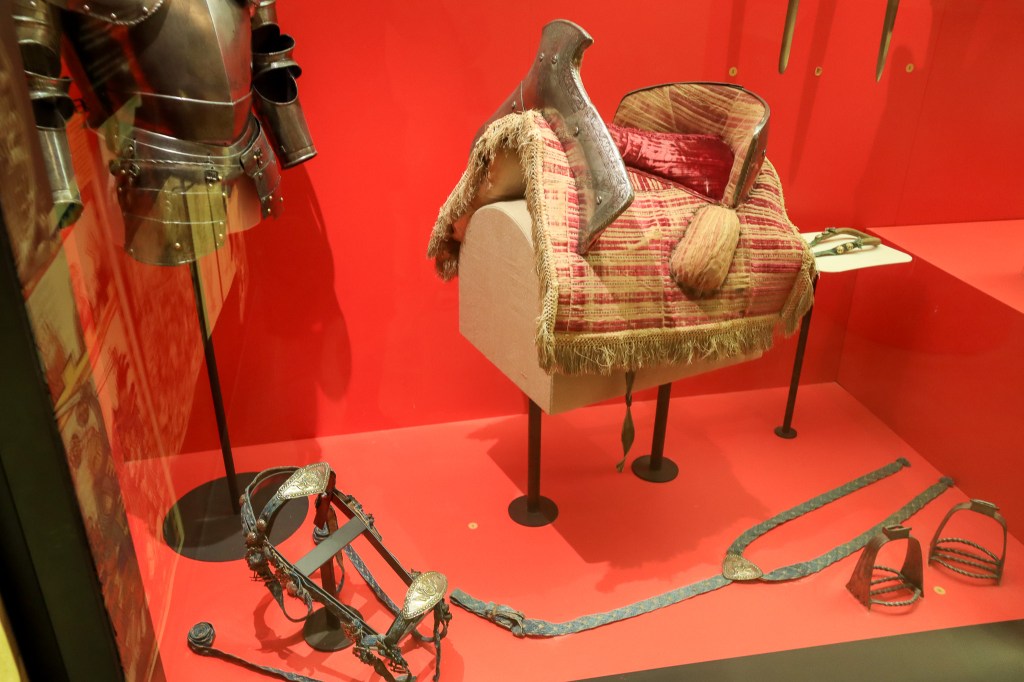
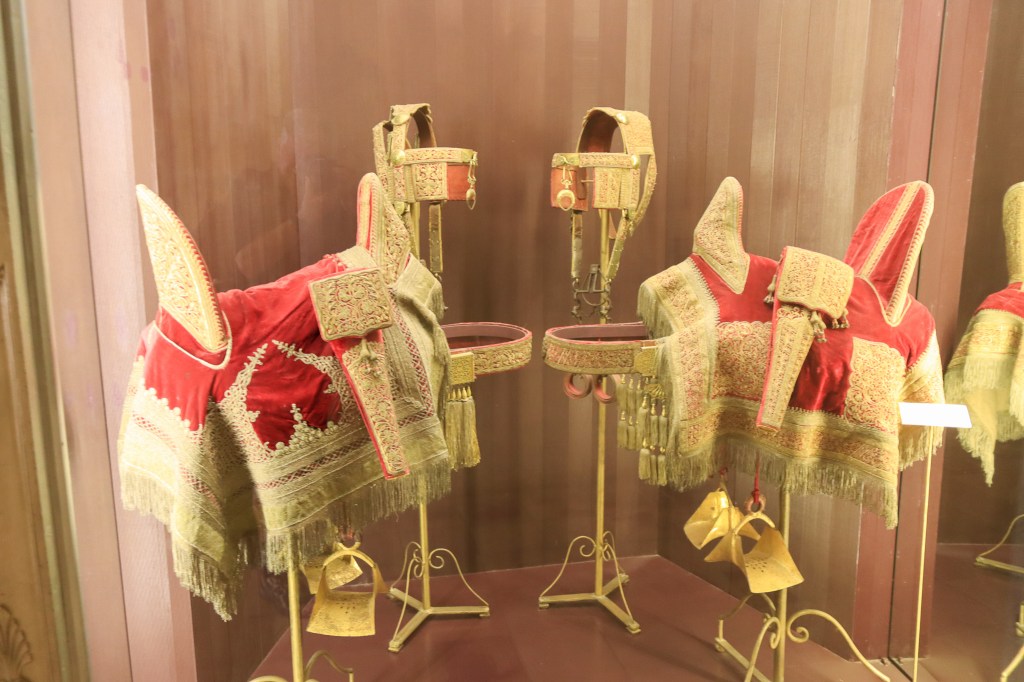
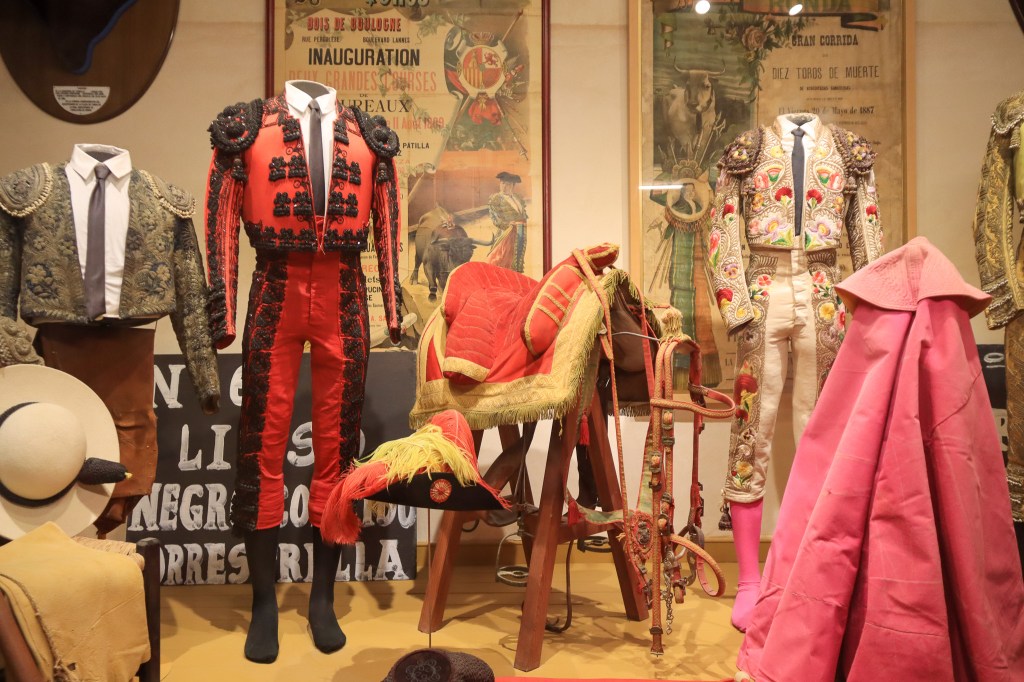
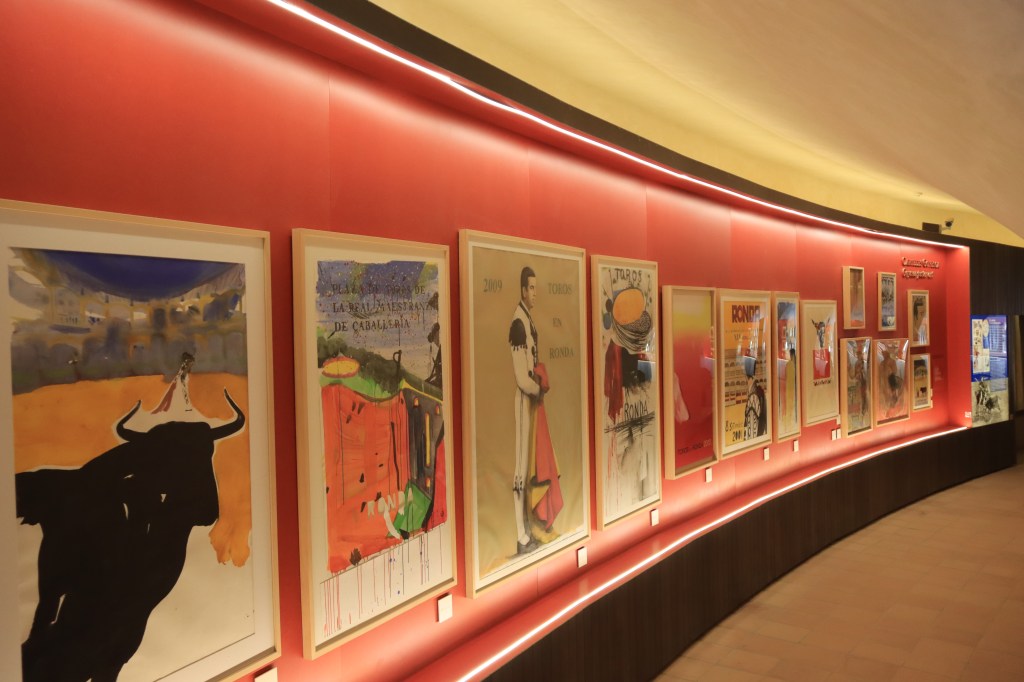
A visit to the bull ring seemed appropriate given the festival theme. It has a fascinating museum under the stands explaining the history of fighting on horseback and how the cavalry originated. Early bull fighting was done on horseback and not until the early 1700’s did the modern style evolve. It was an excellent visit.
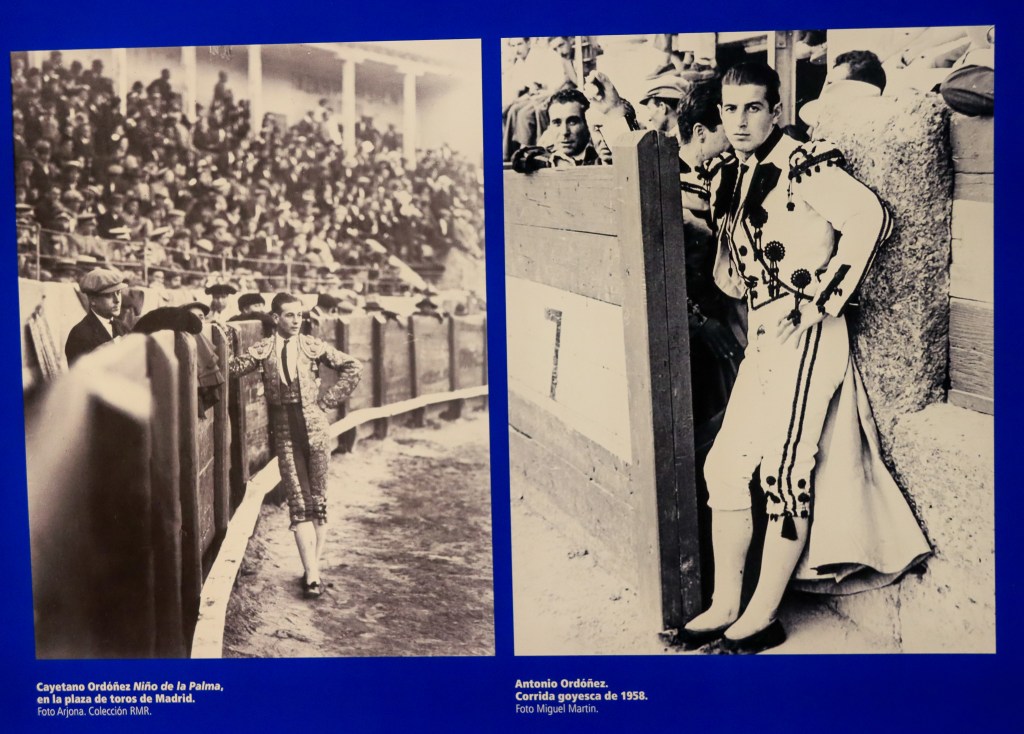
Cayetano Ordonez, (left) founder of the second bullfighting dynasty, and his son Antonio Ordonez (right). Antonio was the crowning figure of 20th C bullfighting, considered the maestro of maestros.
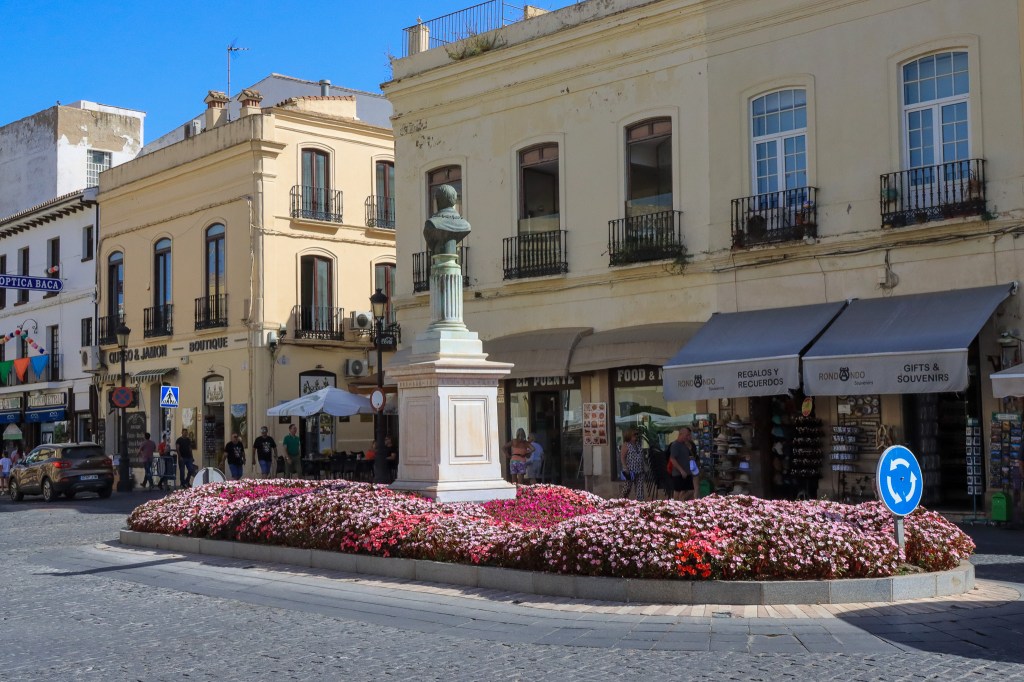
Living up to its reputation as the prettiest town in Spain.
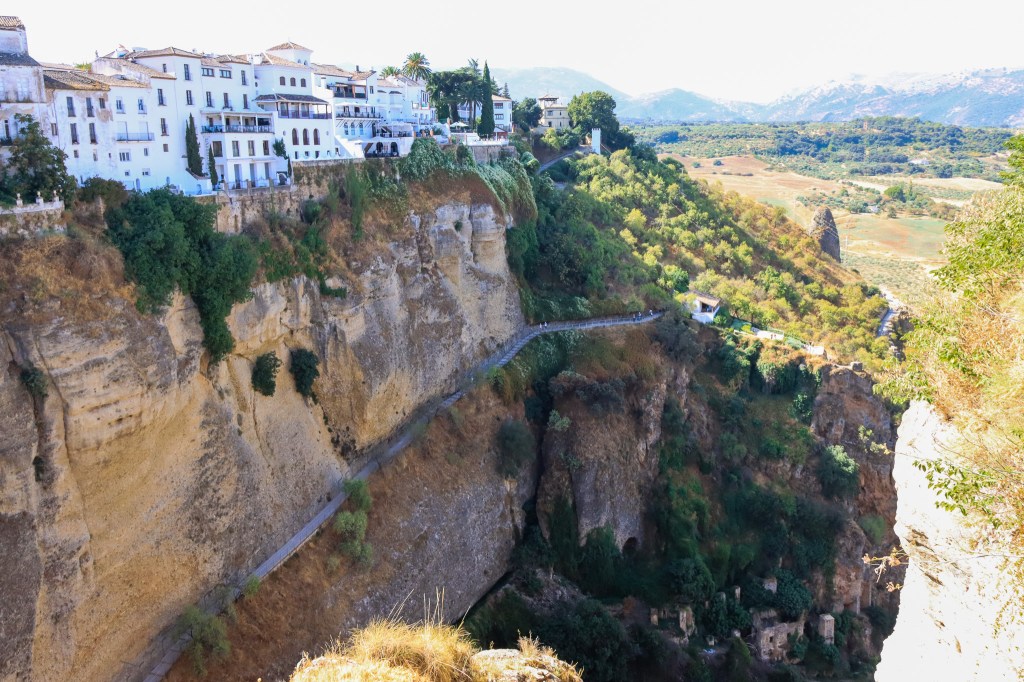
Photographing the bridge was a big ticket item for me this trip. The bridge and 120 m deep gorge dominate Ronda around the old town. Getting the right photo meant I would be taking this path when the sun comes over the bridge in the afternoon.
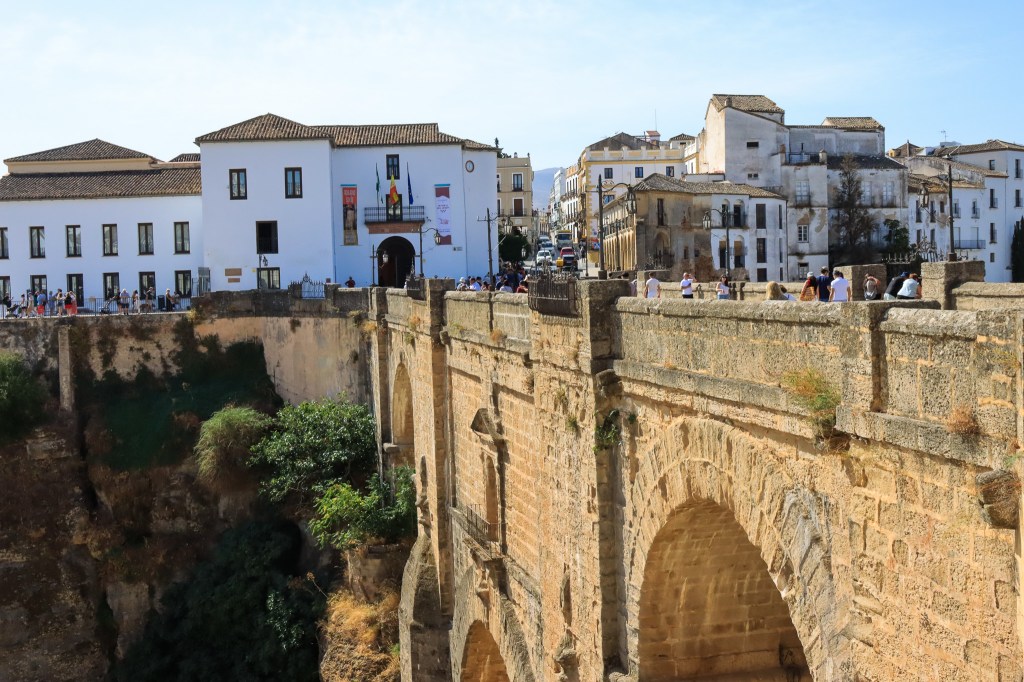
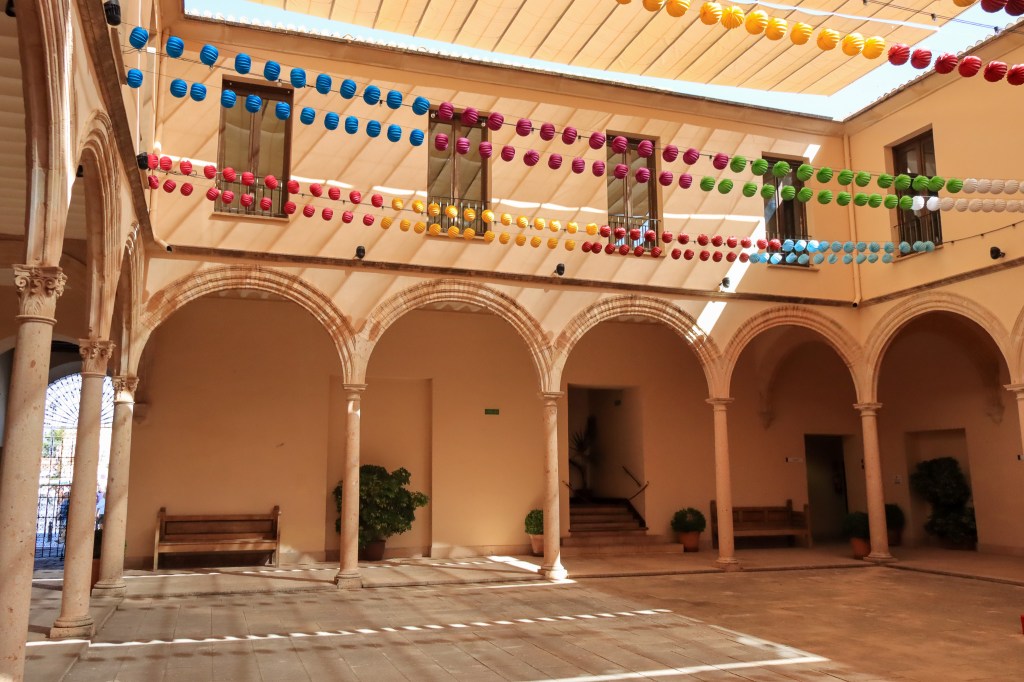
Convent of Santo Domingo.
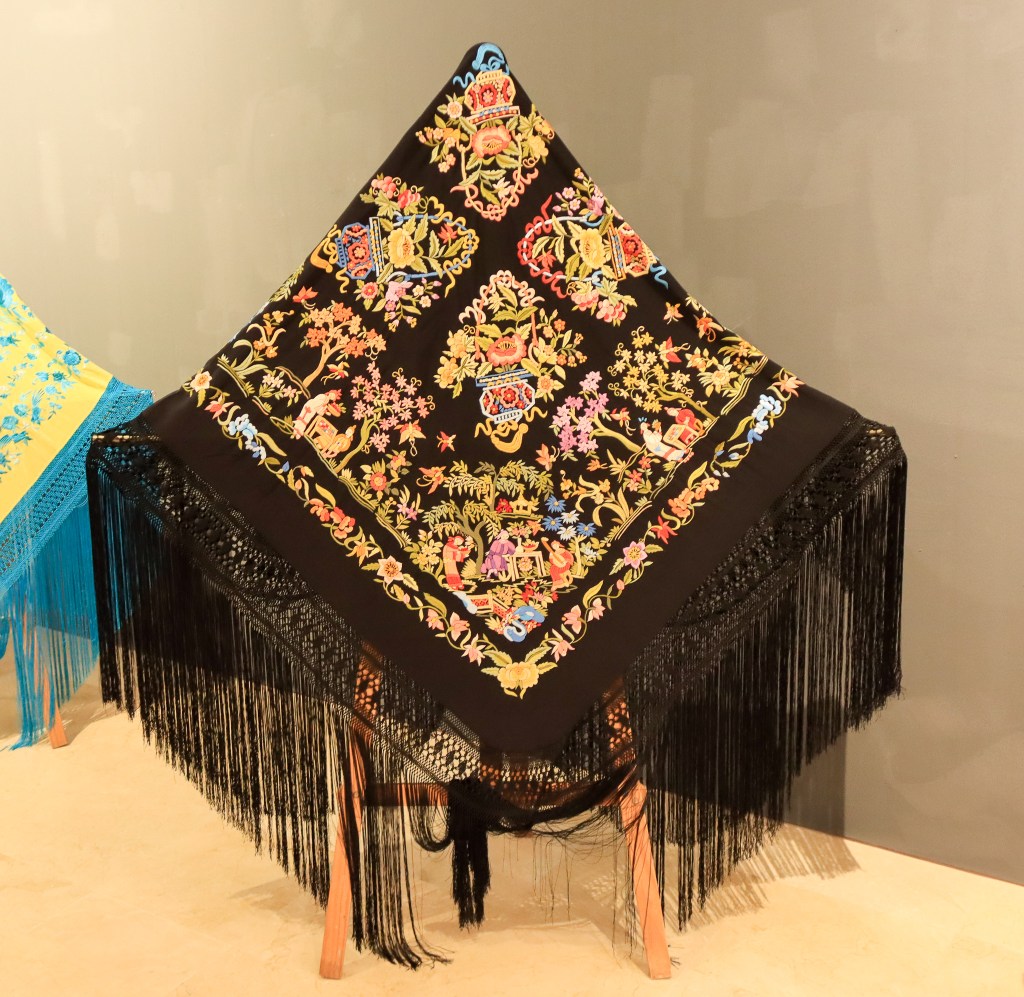
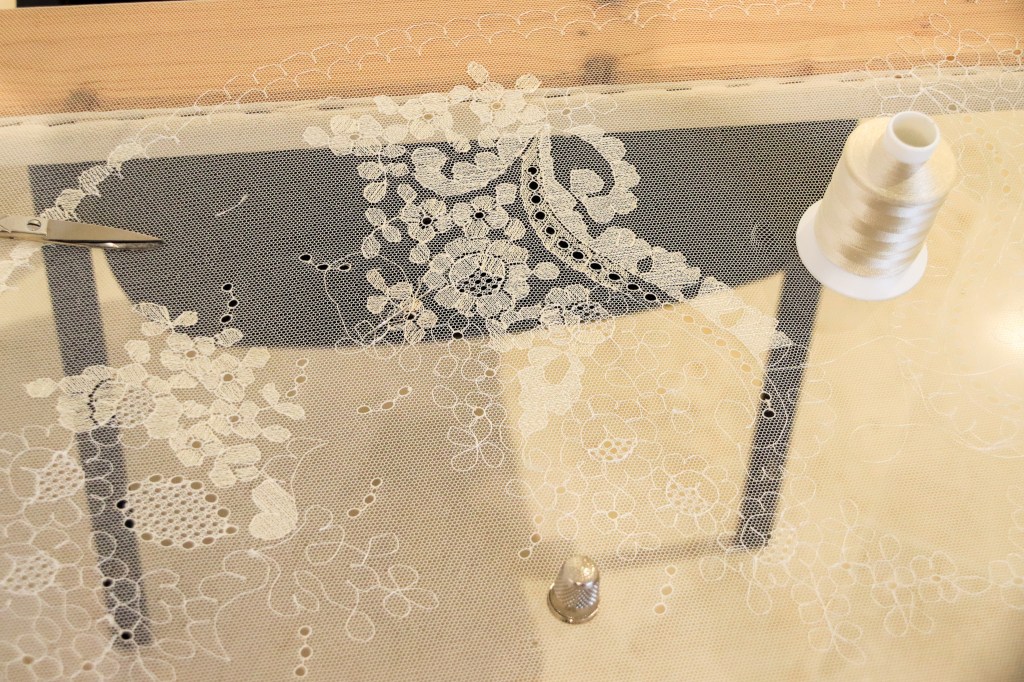
In the convent was a special exhibition of silk embroidery that Collette found was her big highlight of the day. Even a tag along bloke can see this is exceptional work and very rare.
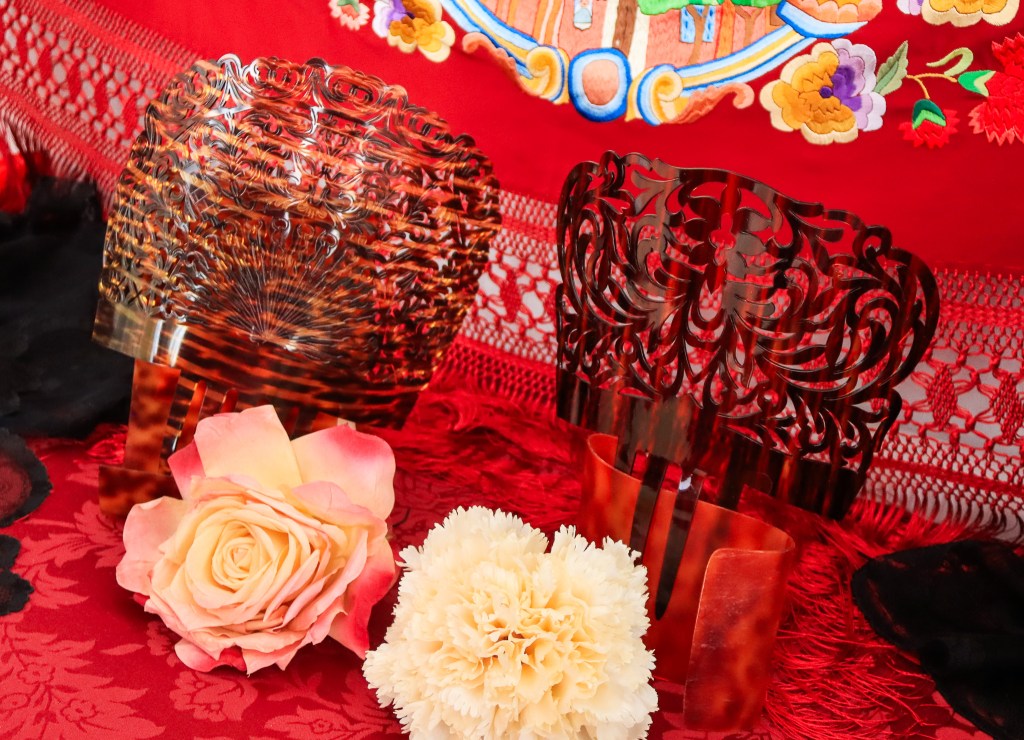
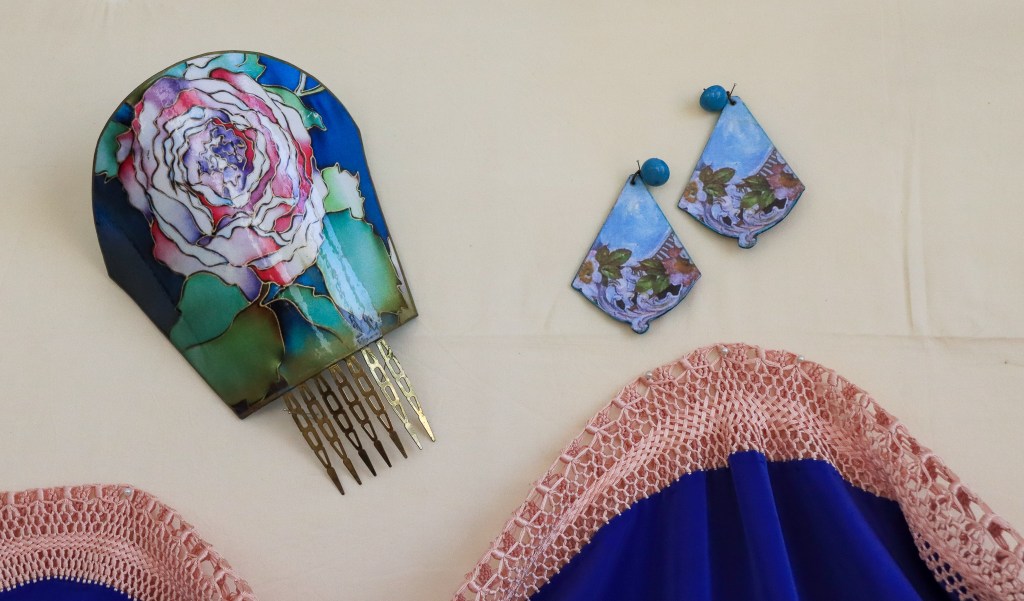
Some very old tortoise shell combs.
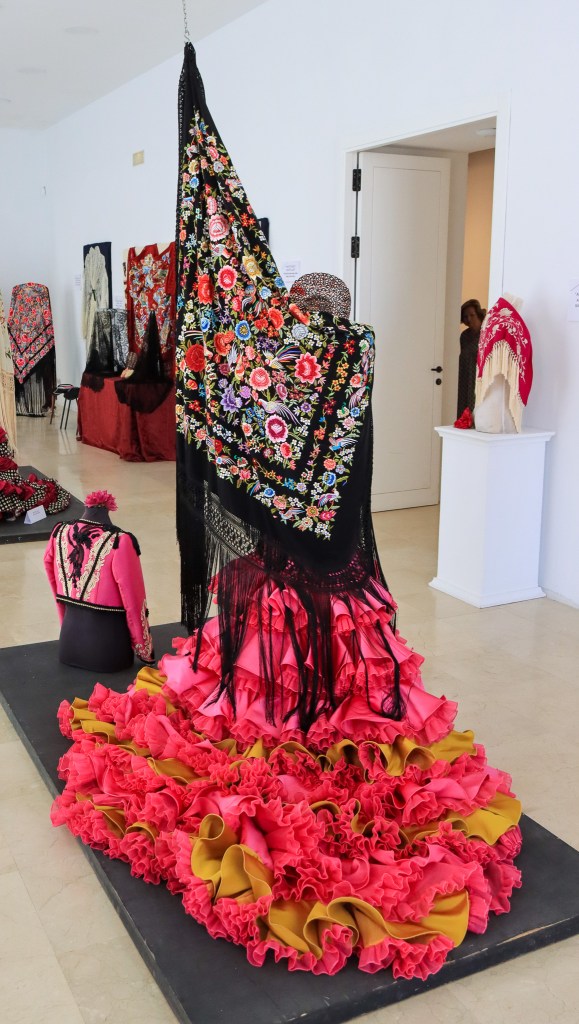
A stunning flamenco dress.
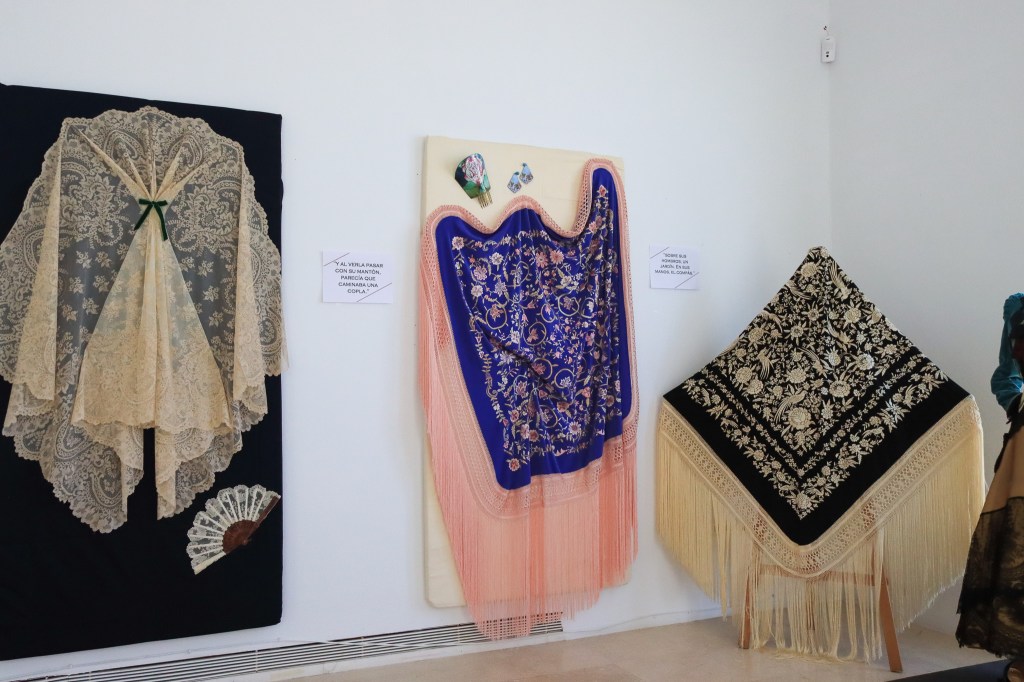
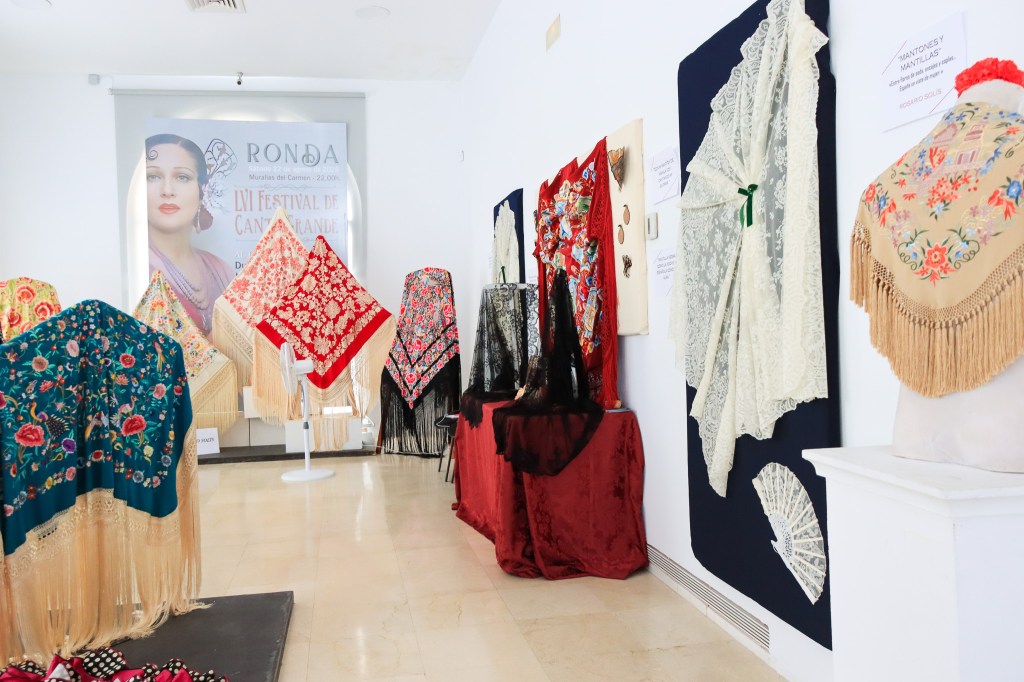
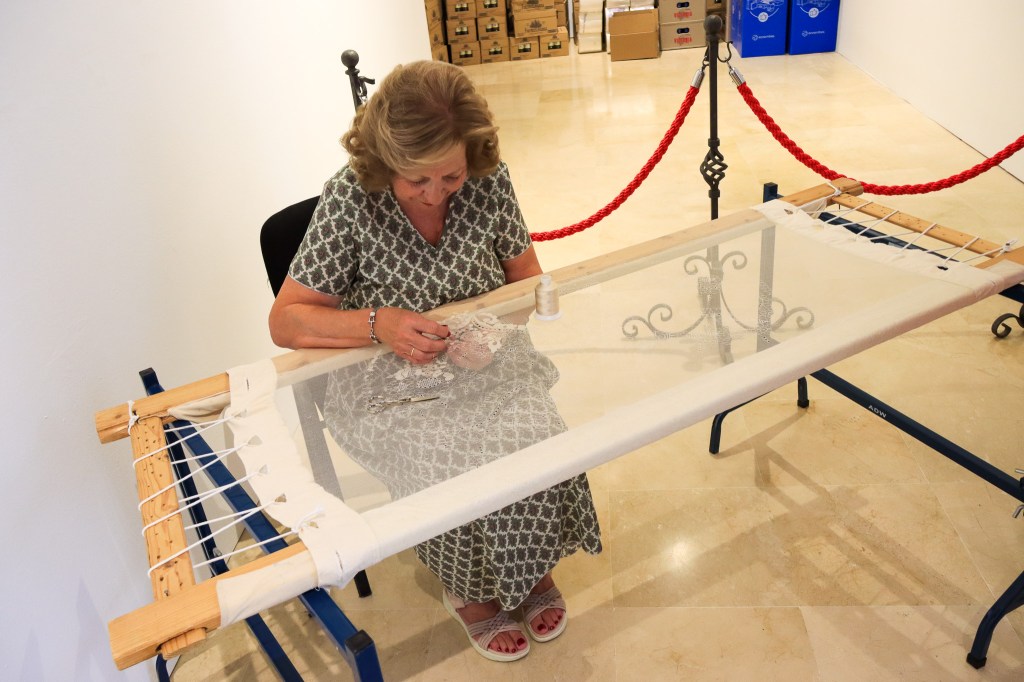
Demonstrating making silk lace.
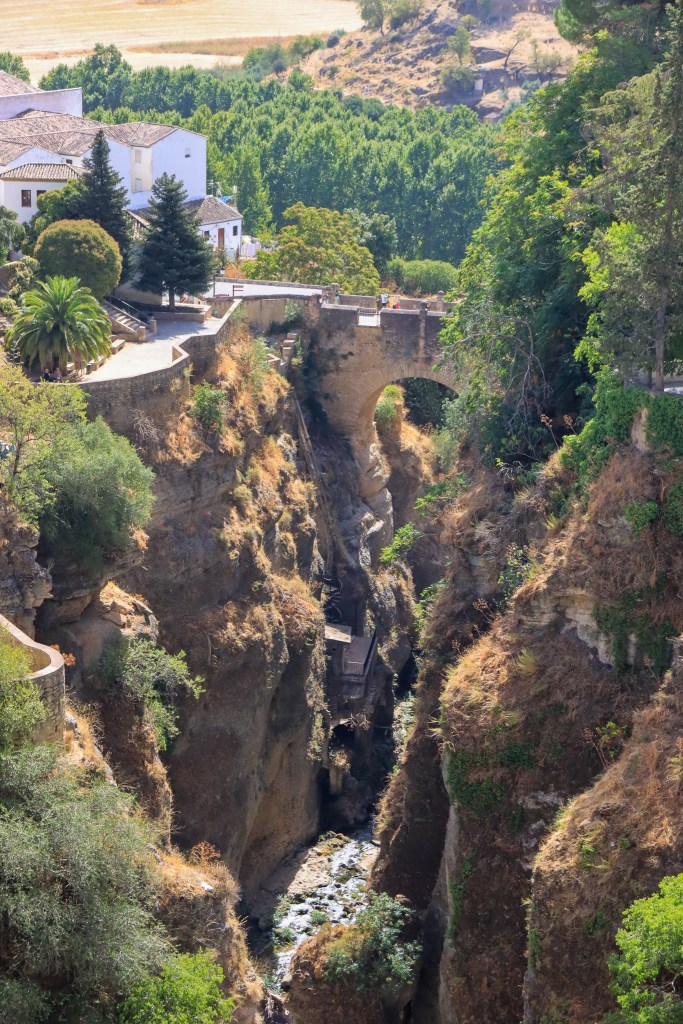
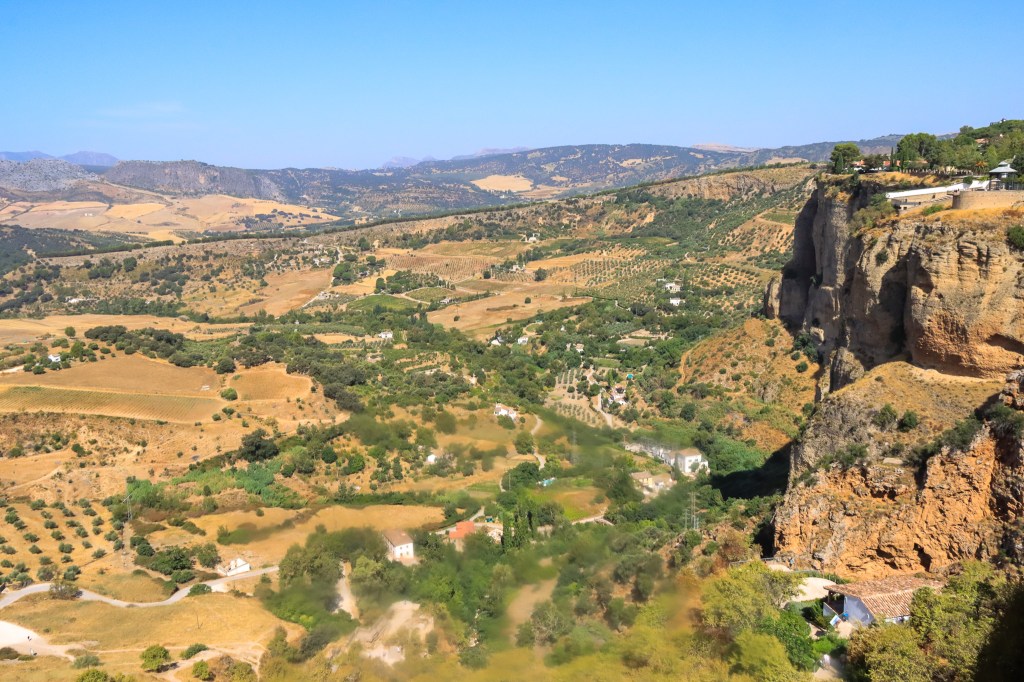
The views and the gorge just go on and on.
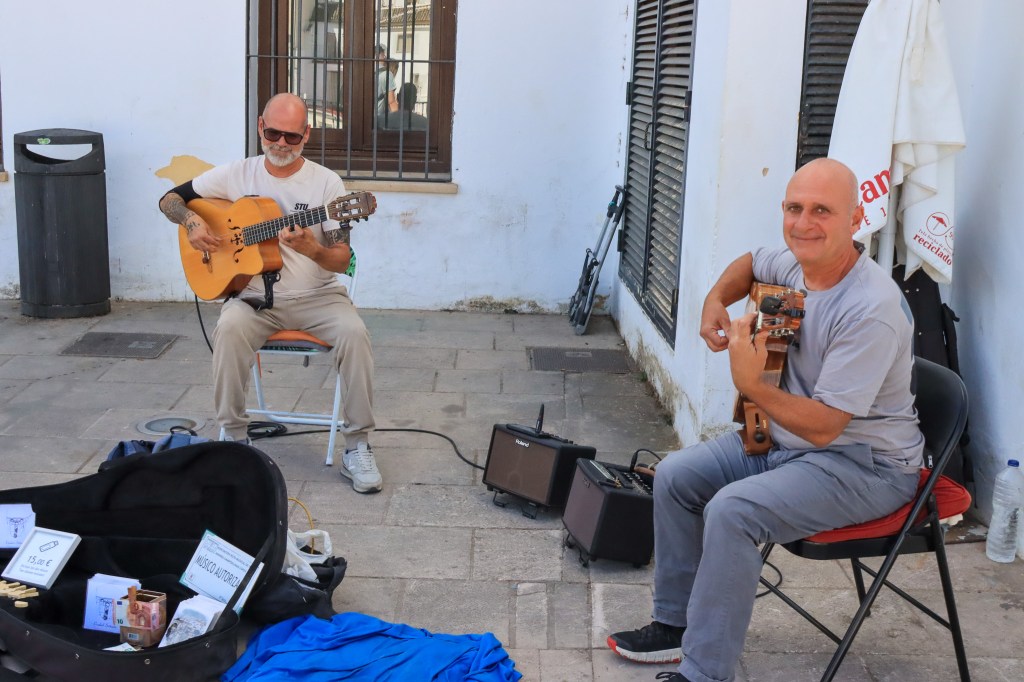
These two guys were playing classical guitar together. So good I bought a CD.
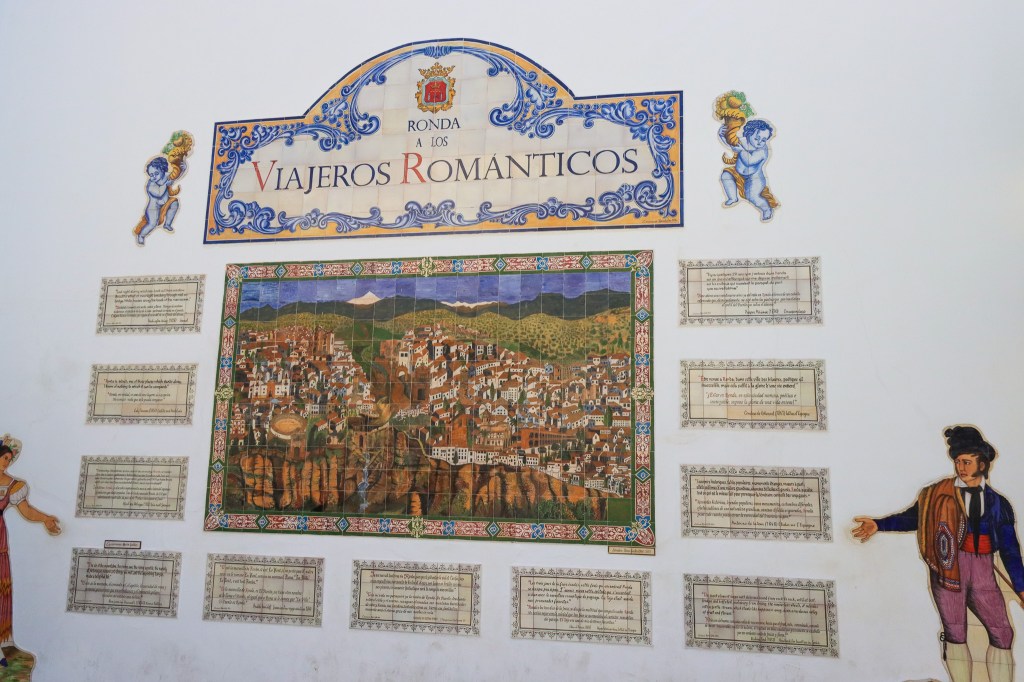
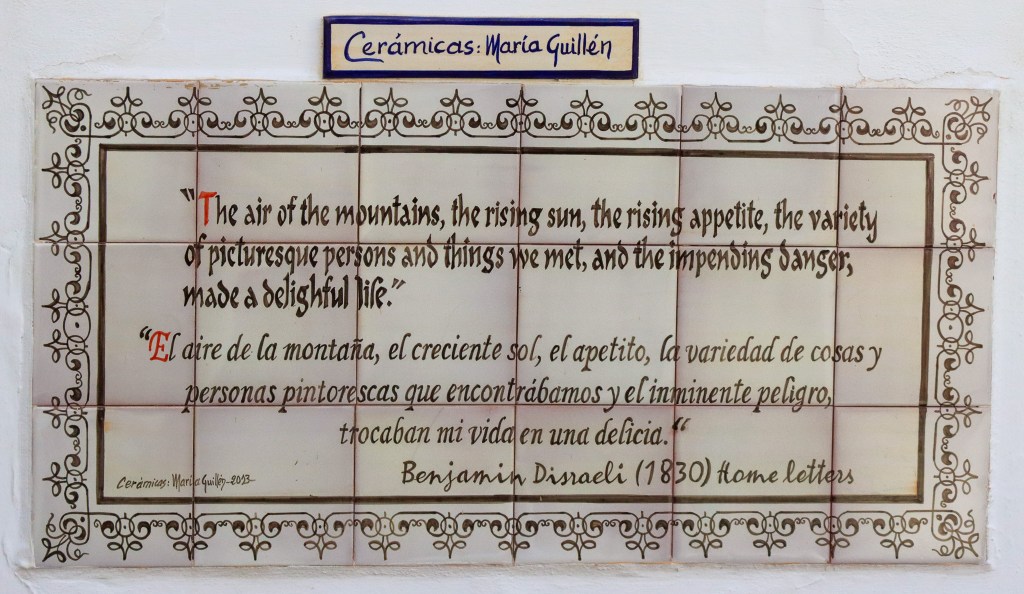
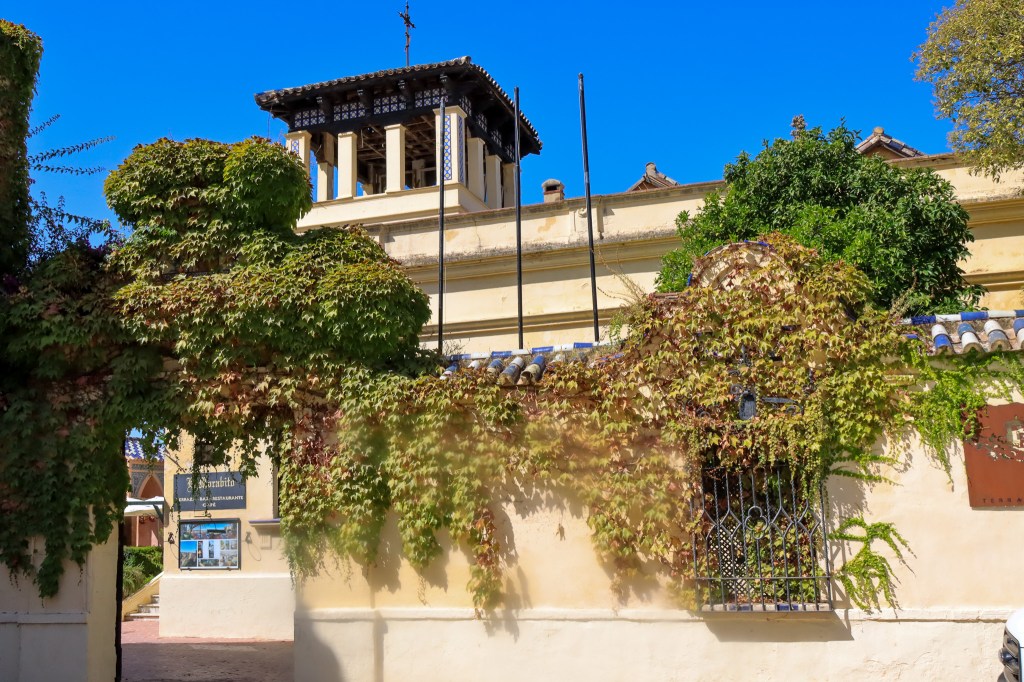
Beautiful architecture at every turn. This one happens to be a restaurant.
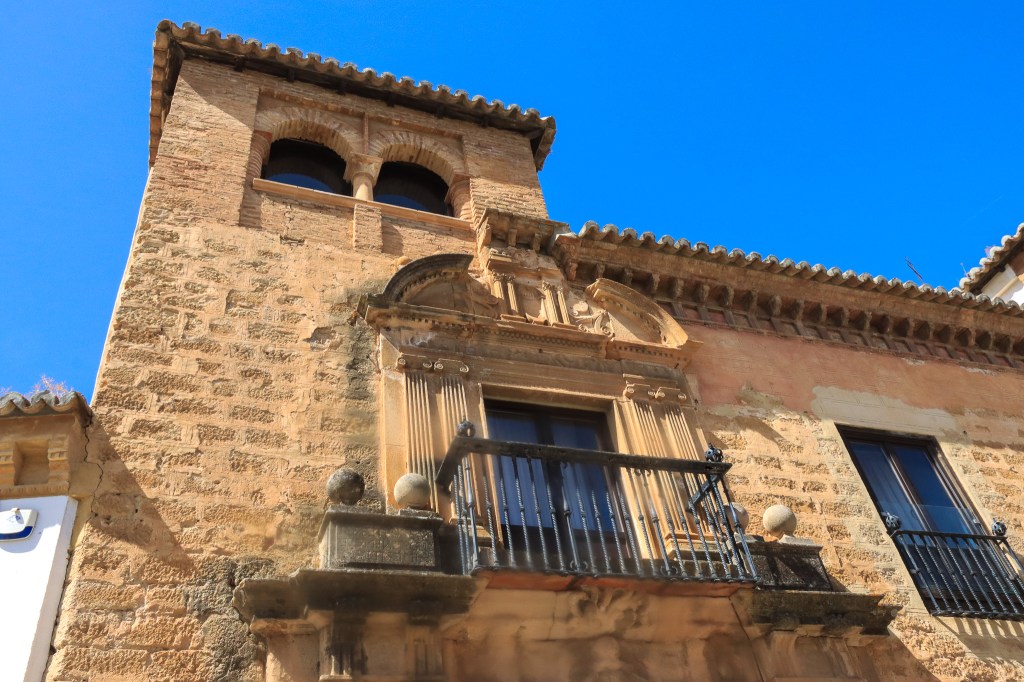
Mondragon Palace was built in the 14th C by the Moorish rulers of Ronda and home to the Moorish King Abomelic. Much of the original architecture has been changed and it is now an important history museum in Ronda.
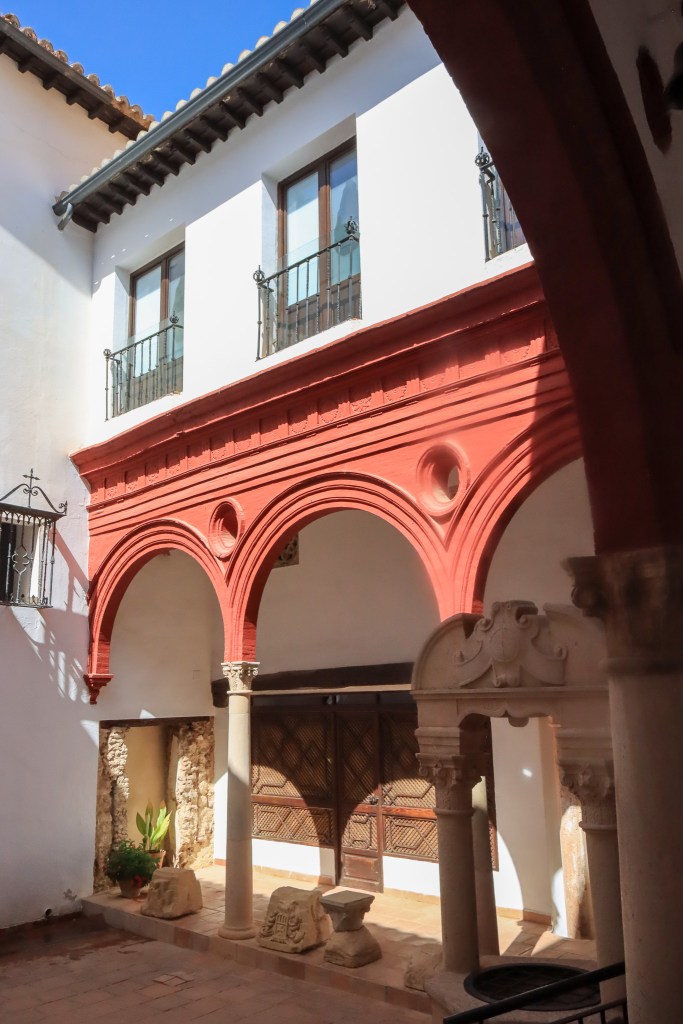
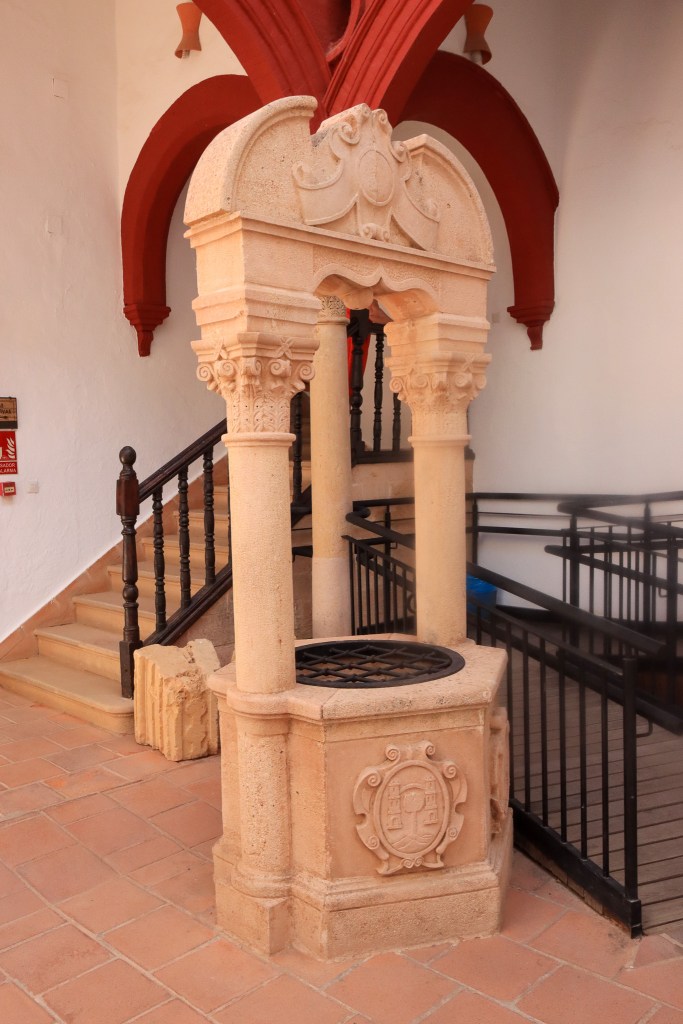
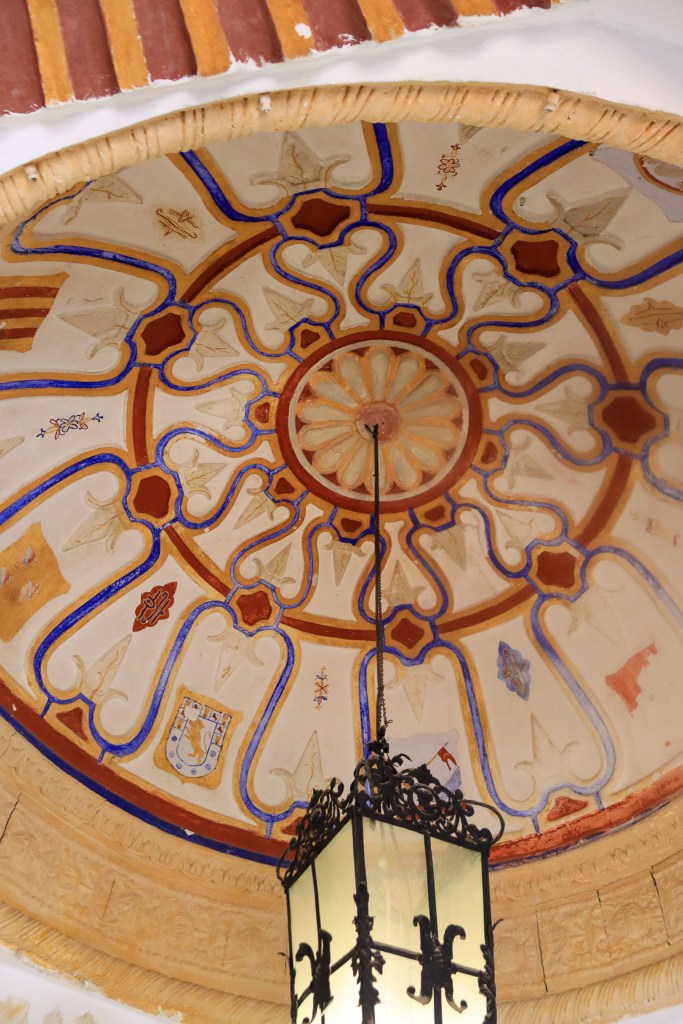
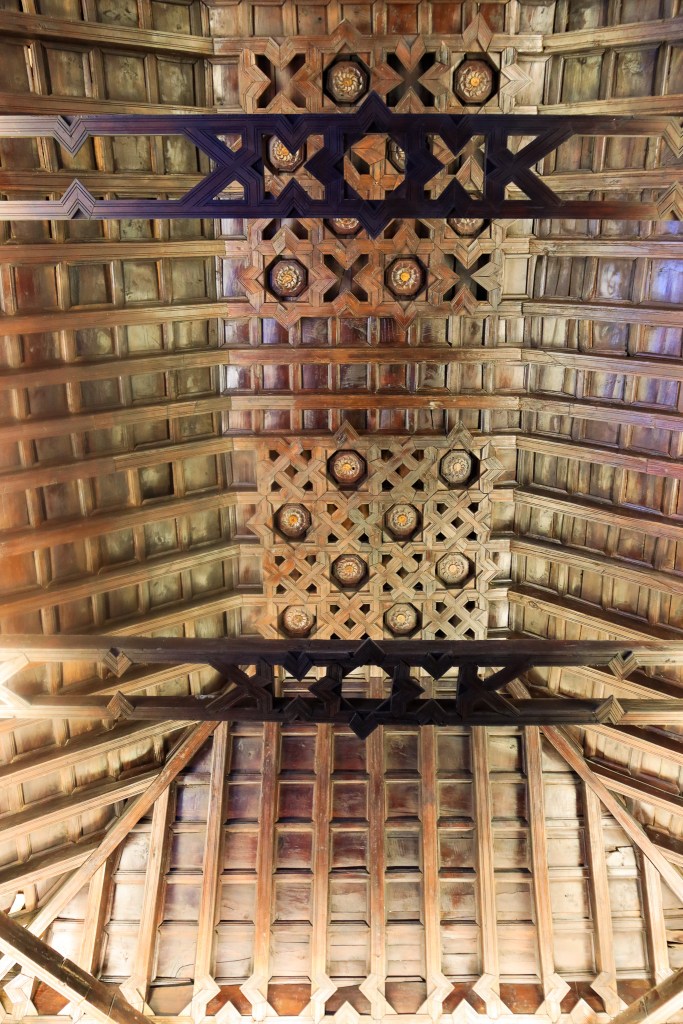
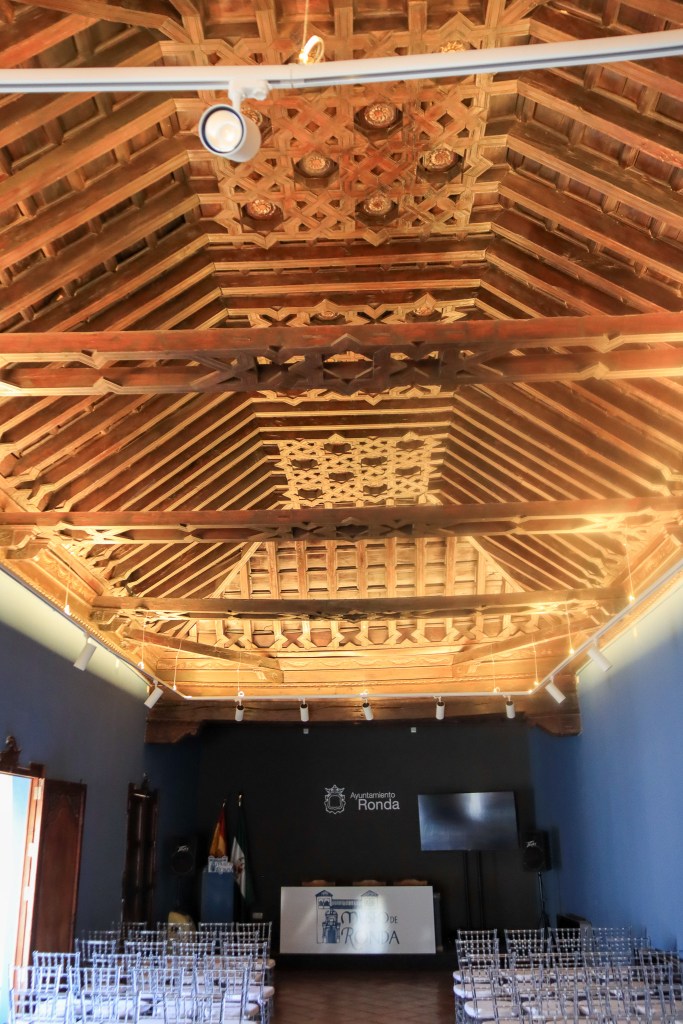
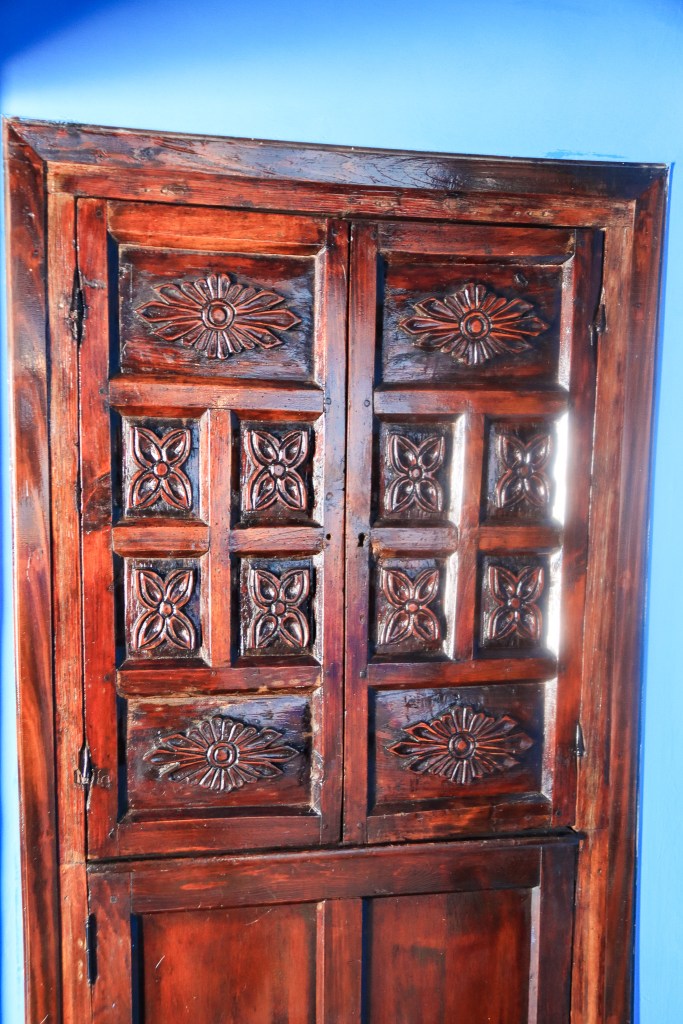
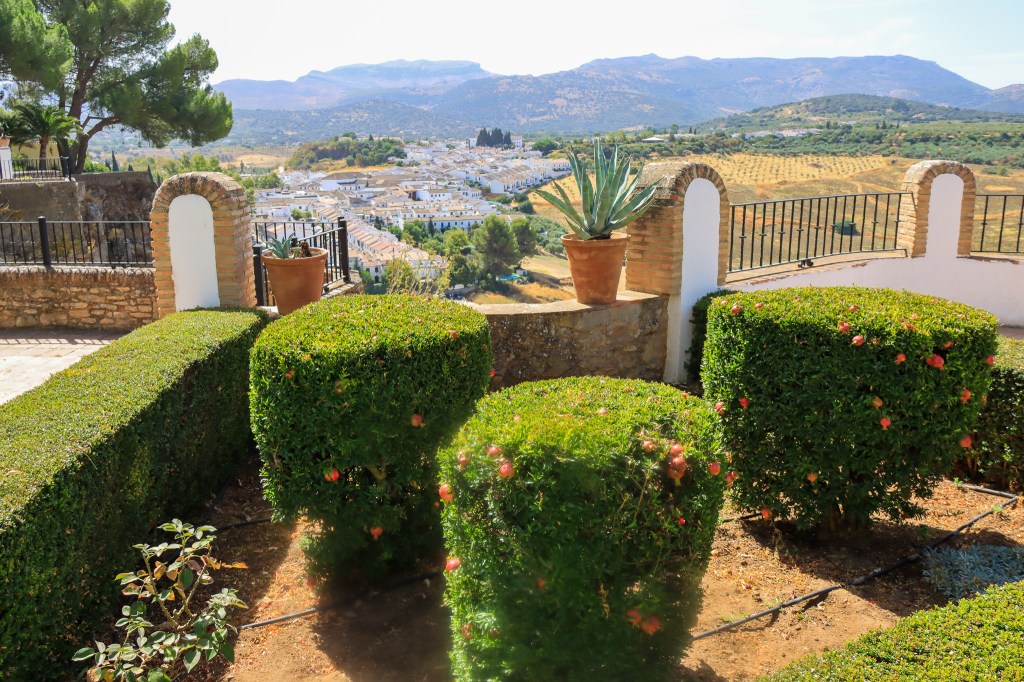
Pomegranate garden.
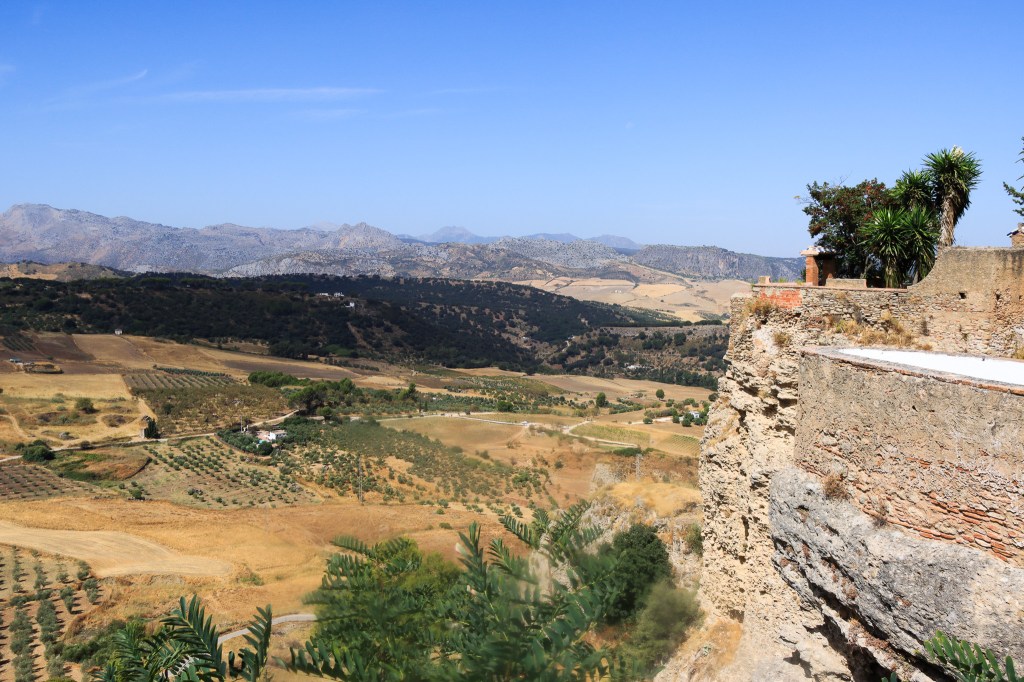
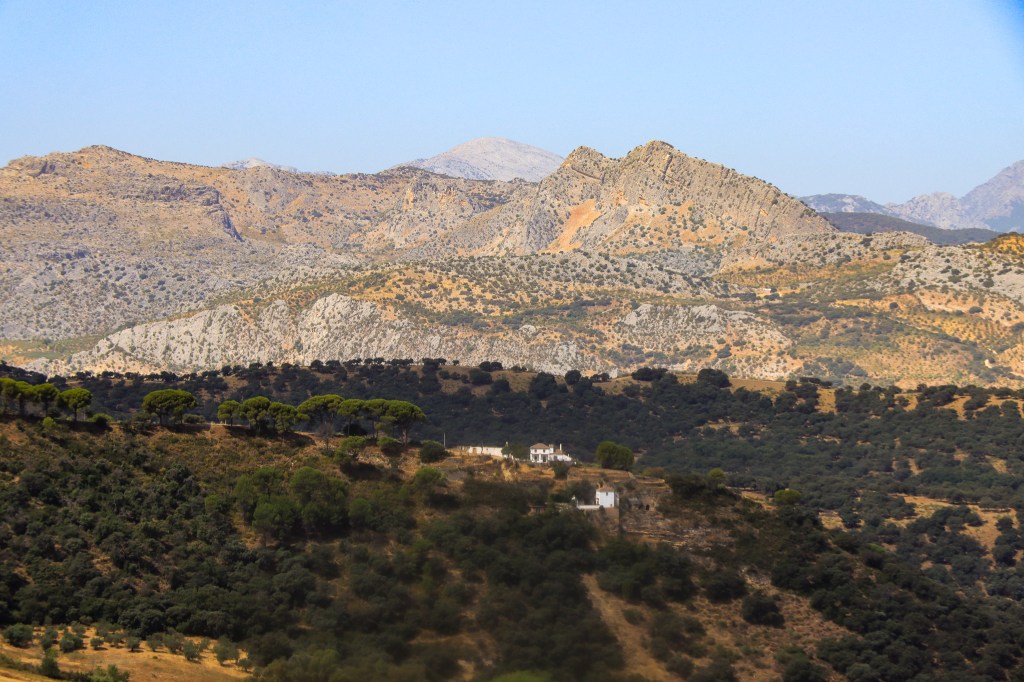
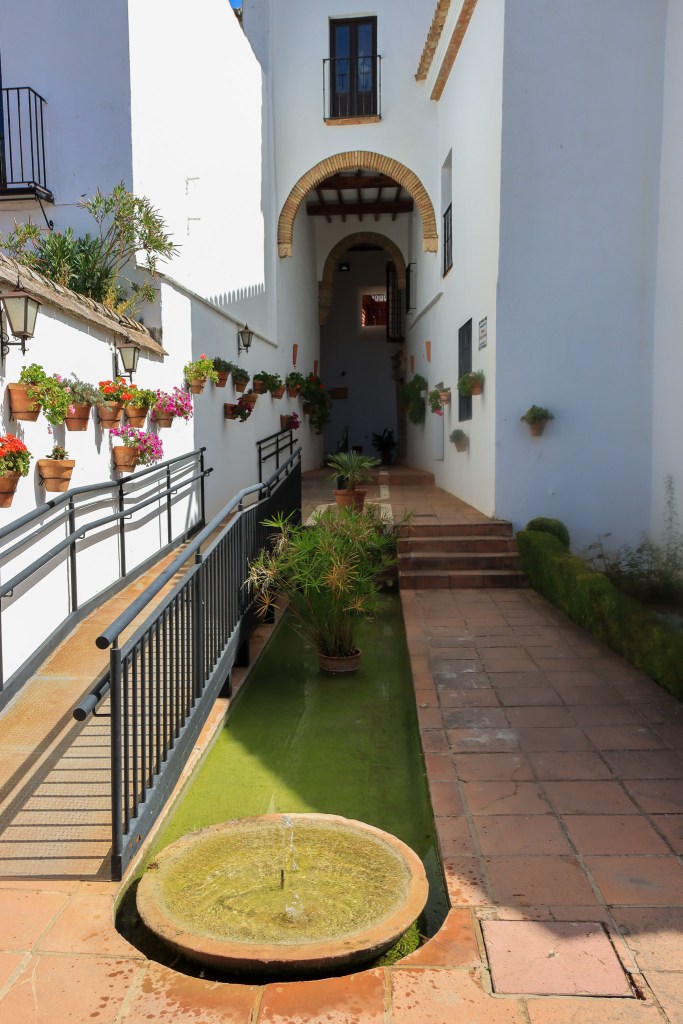
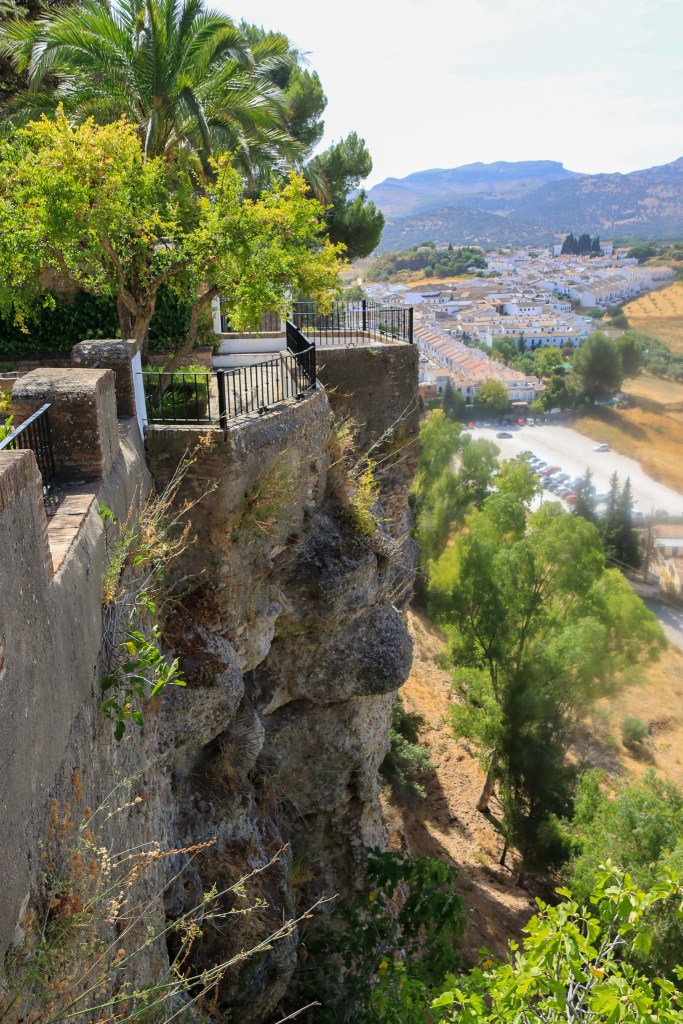
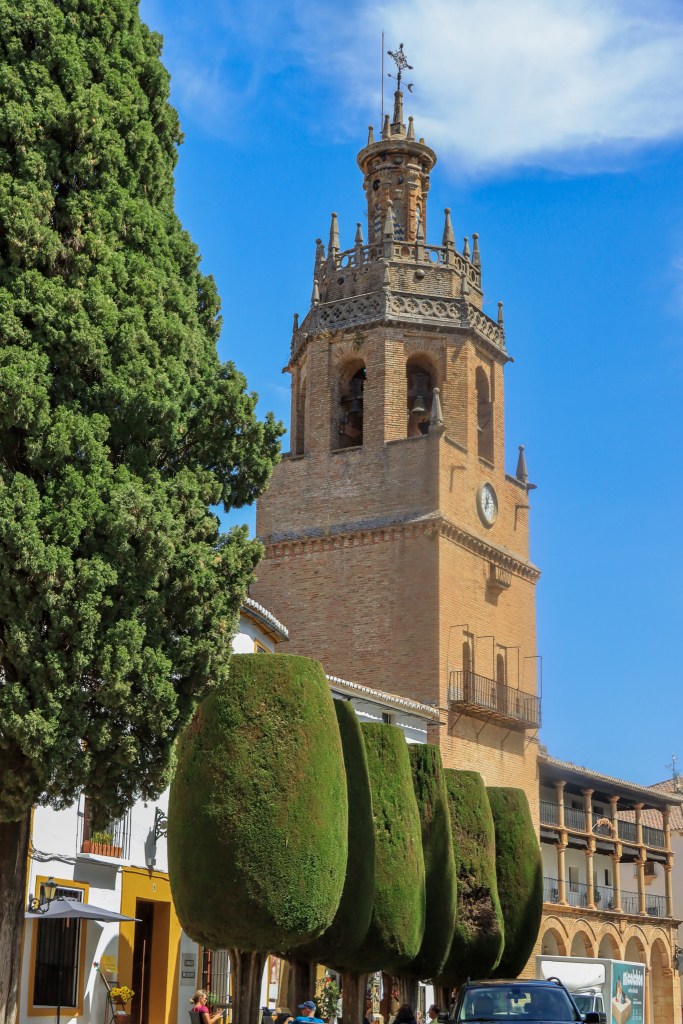
More random sights of the town.
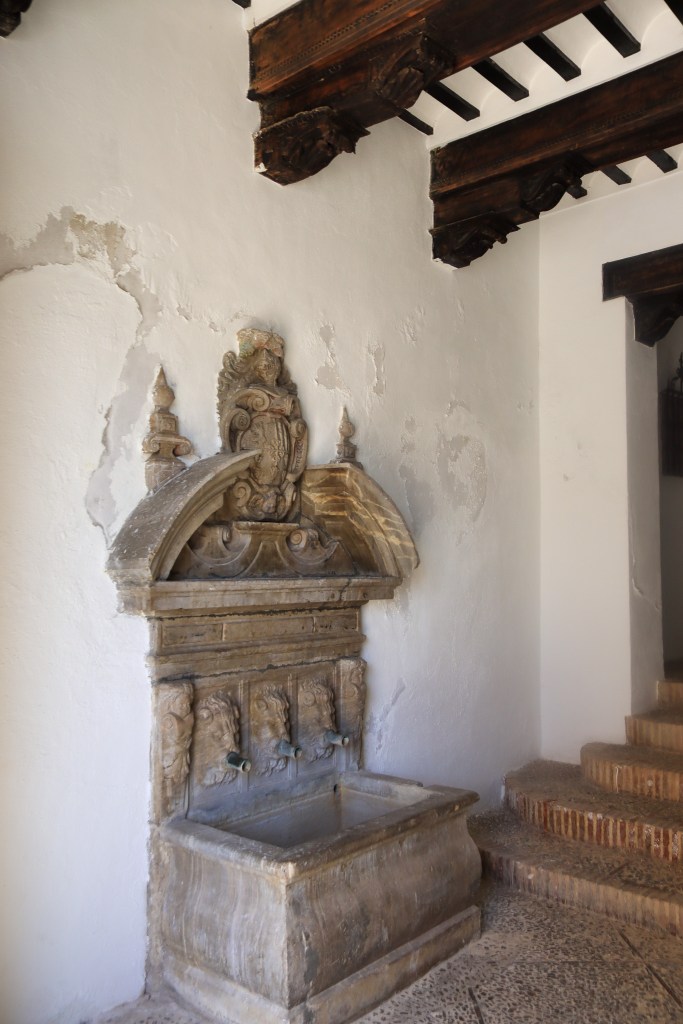
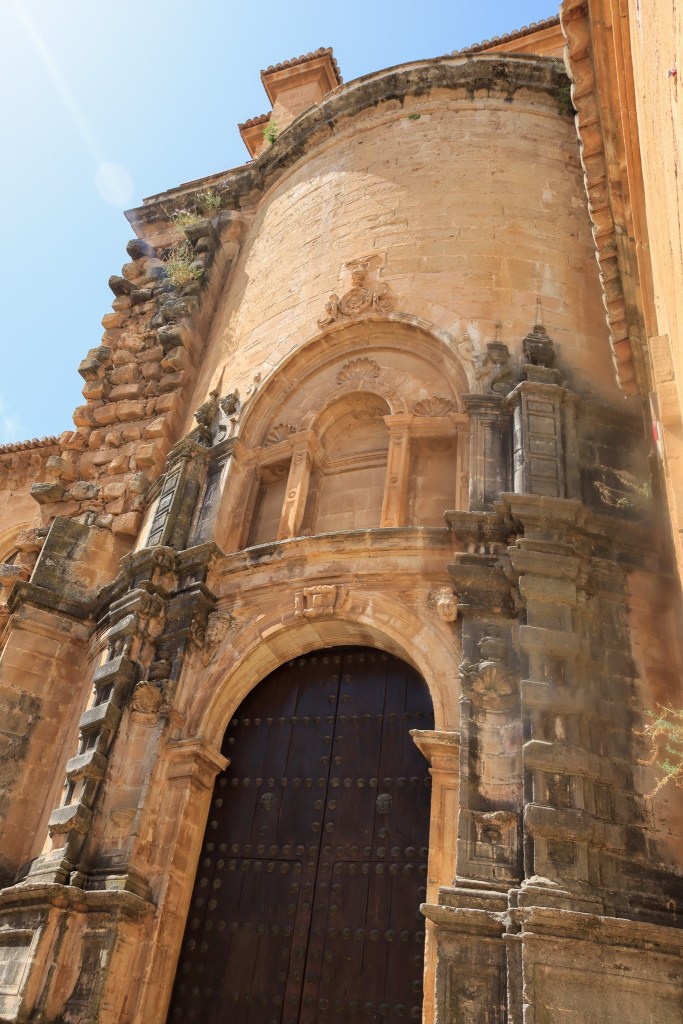
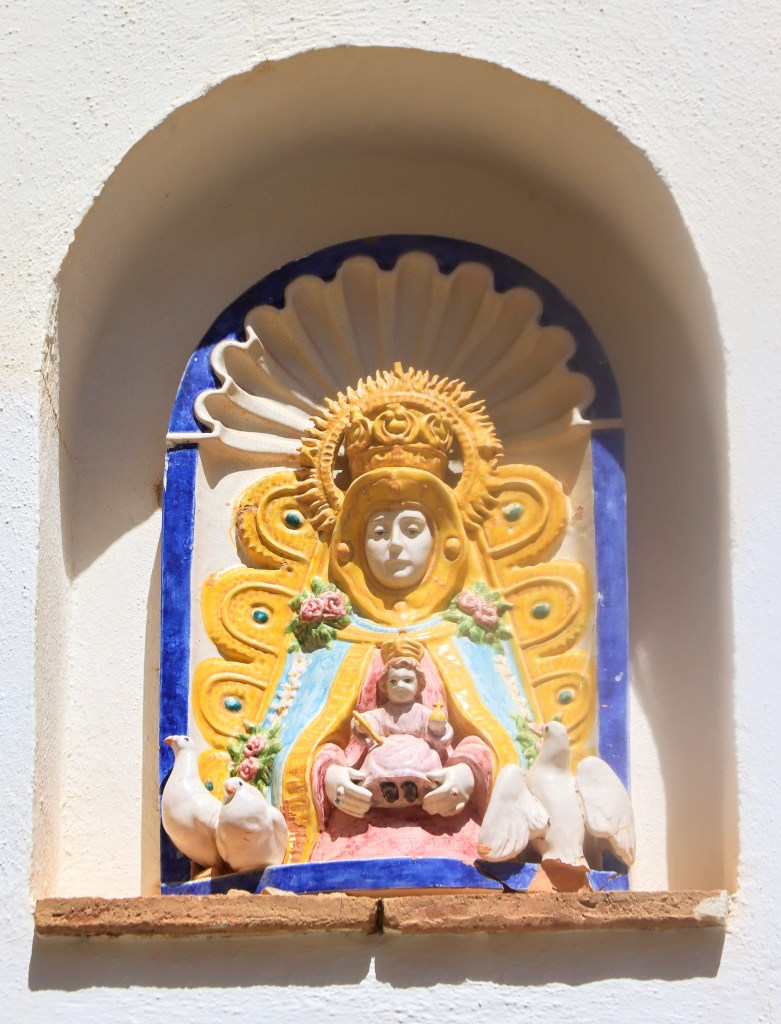
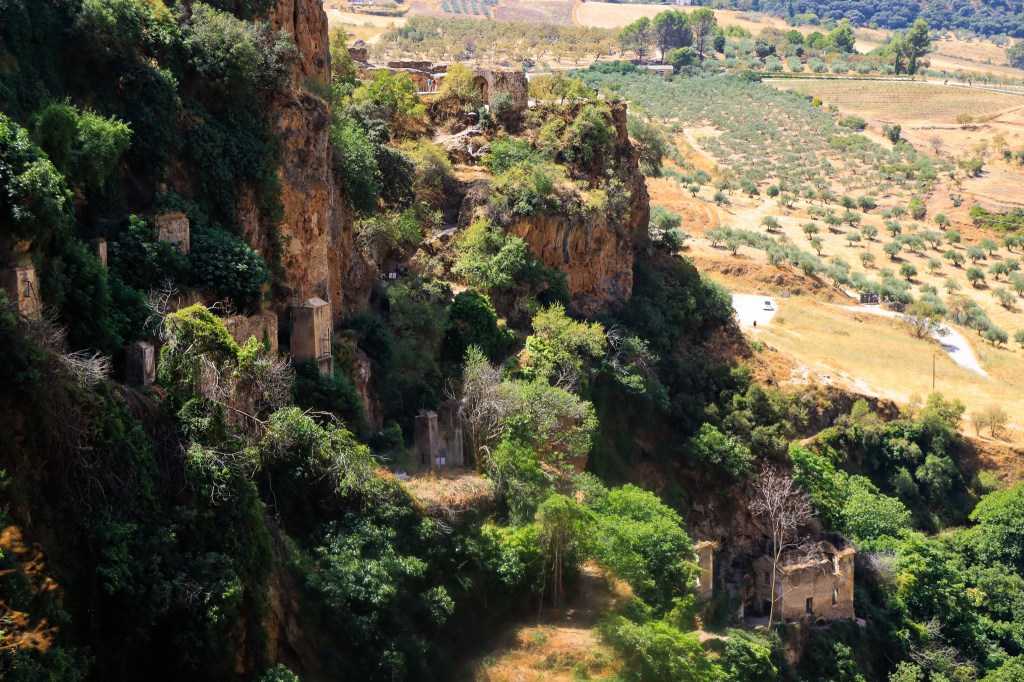
Just a few shots from my hike down the hillside. It was worth every bit of the climb back up.
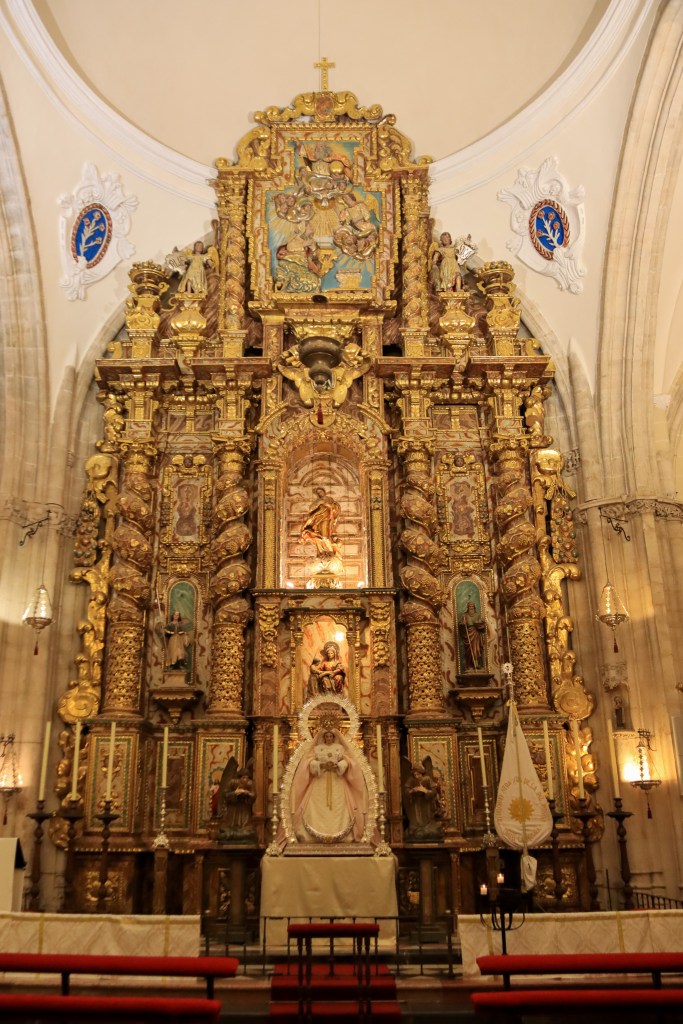
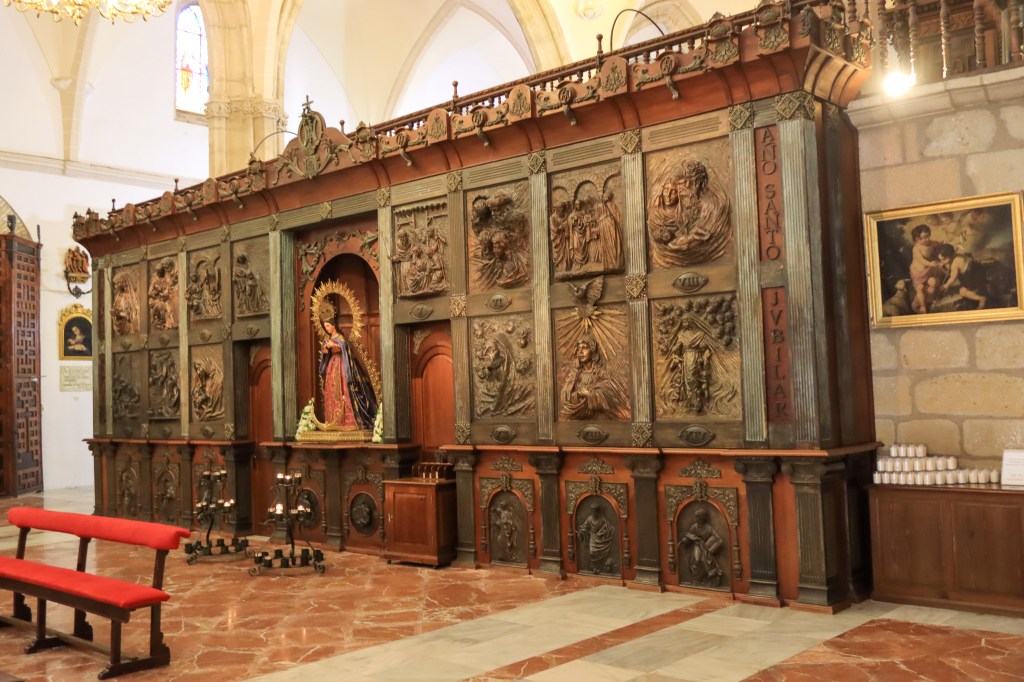
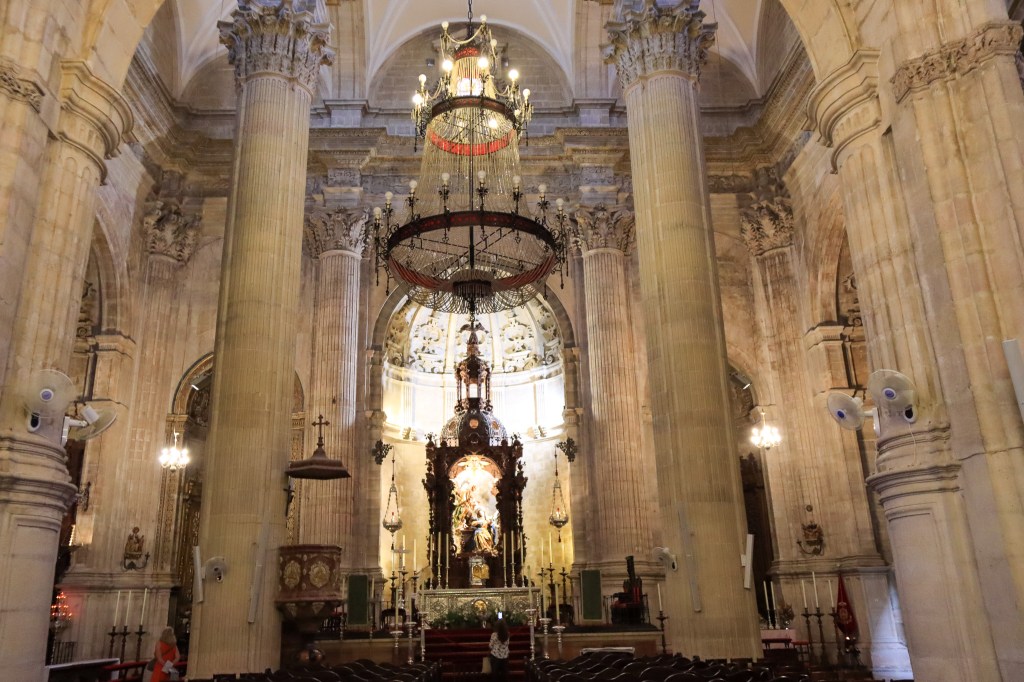
On the way back to the van we stumbled into the Iglesia del Espiritu Santo church, often called Ronda’s unofficial cathedral. The outside is very plain and almost fortress like but the inside is magnificent and huge.
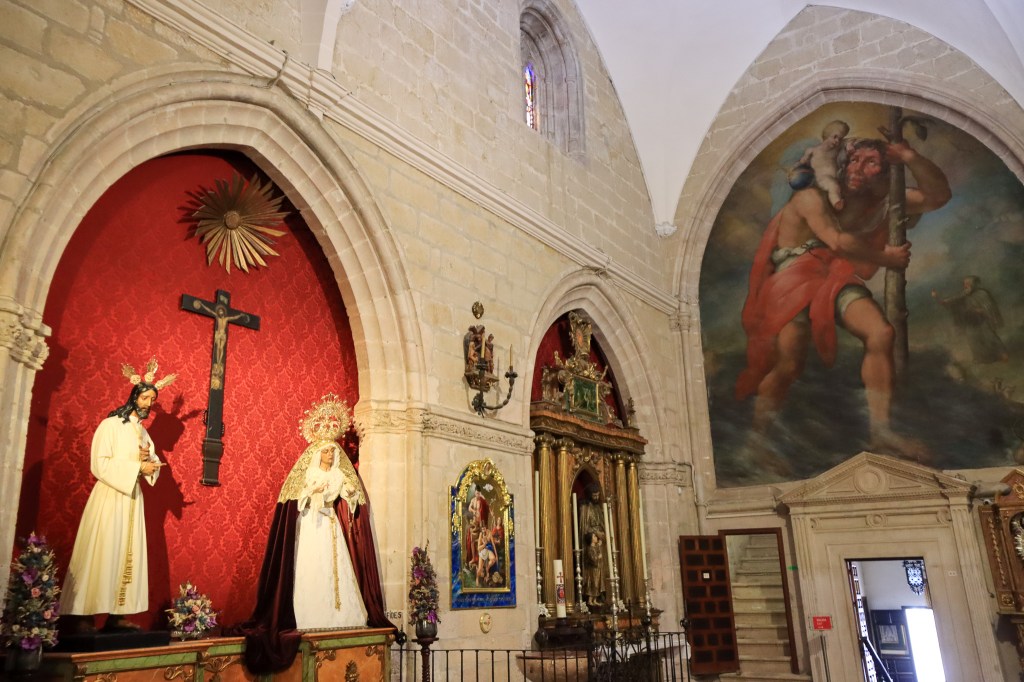
The church was completed in 1505 and was built over a former mosque.
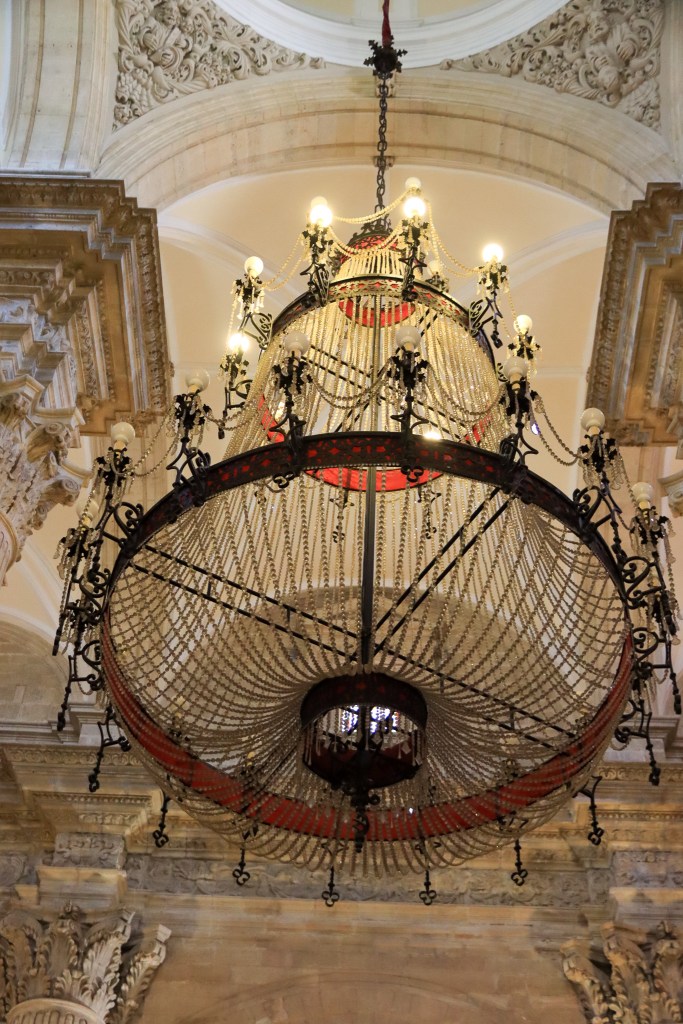
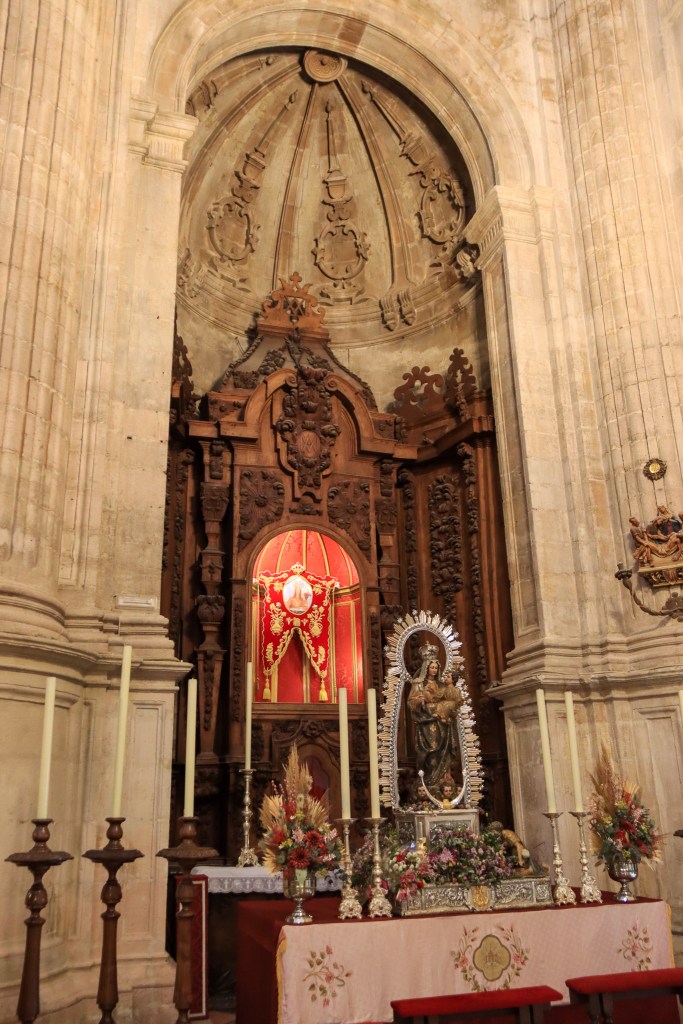
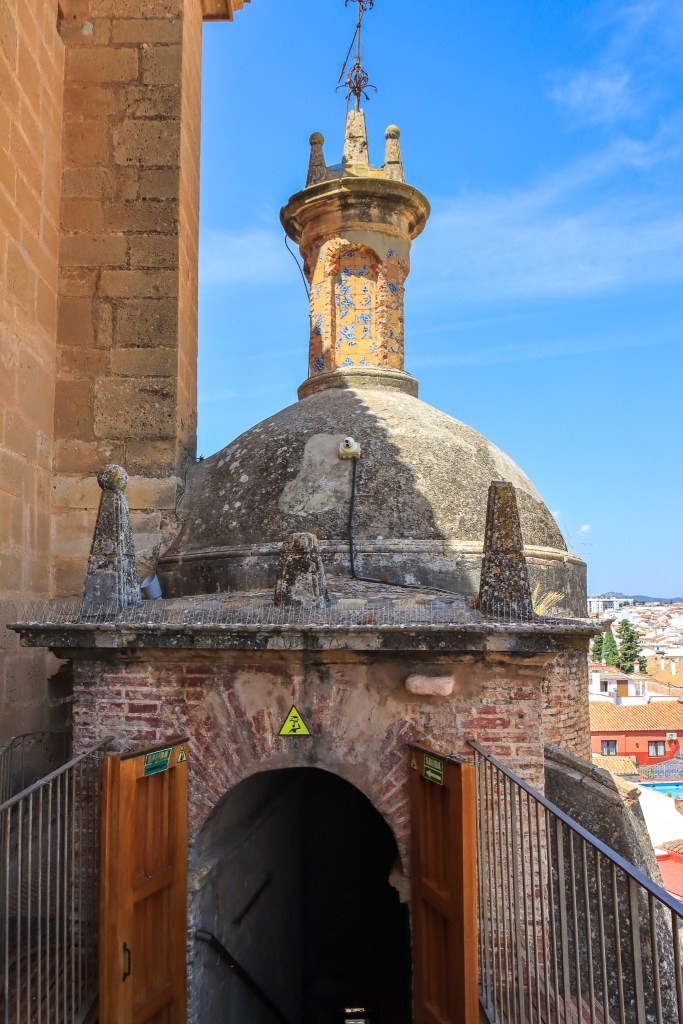
Collette noticed a sign that said ‘stairs to the upper decks’ so we started climbing an ancient spiral staircase. This is where we came out, on the roof.
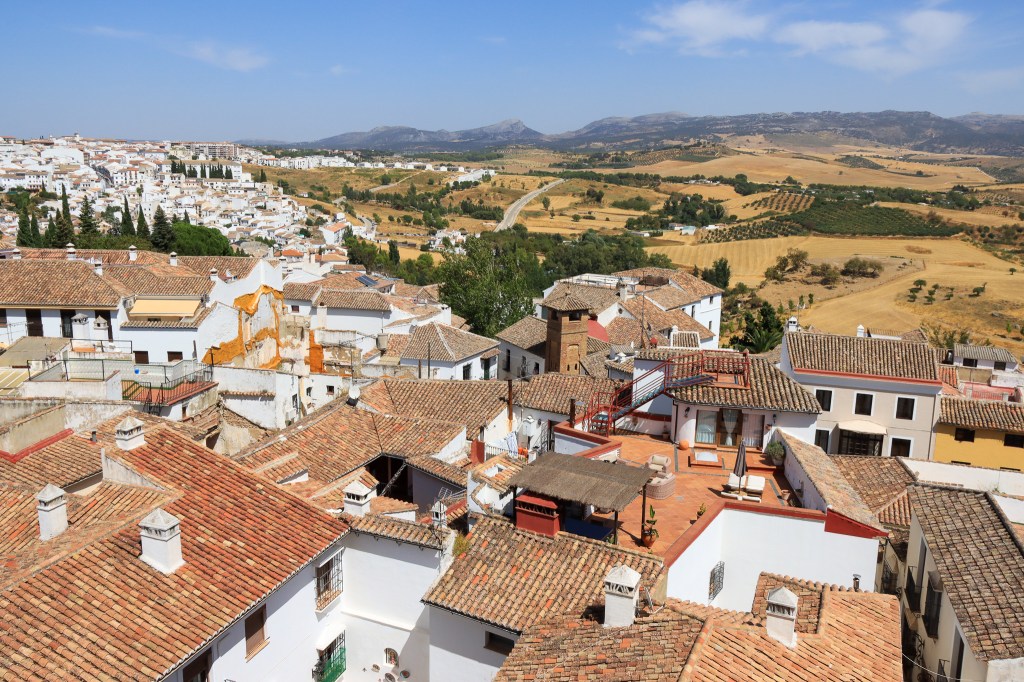
The views around were terrific.
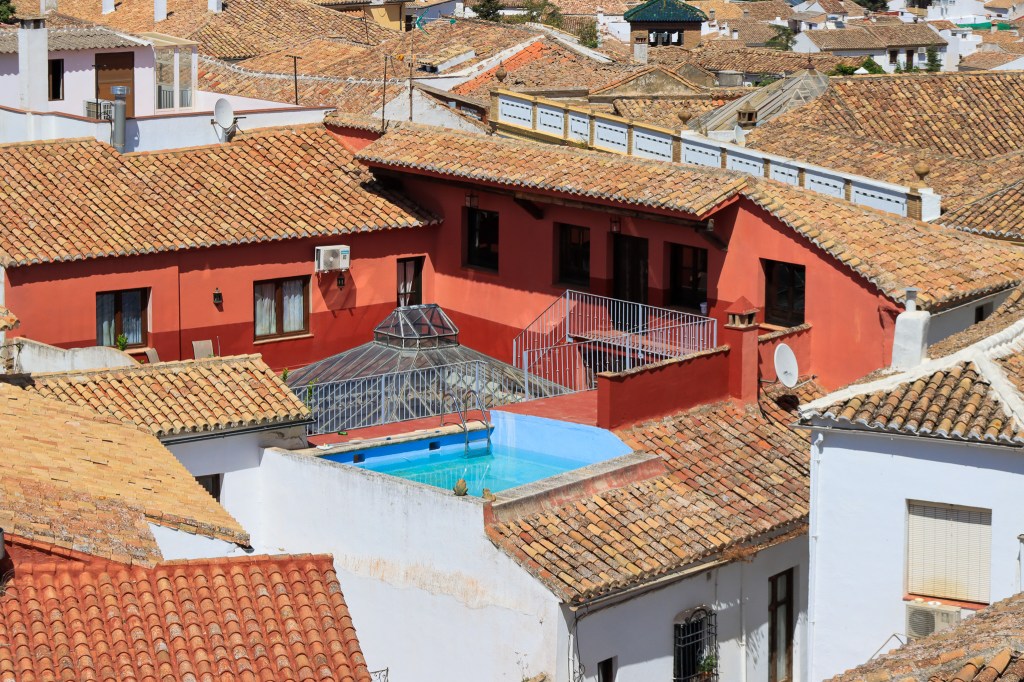
Great place for a pool.
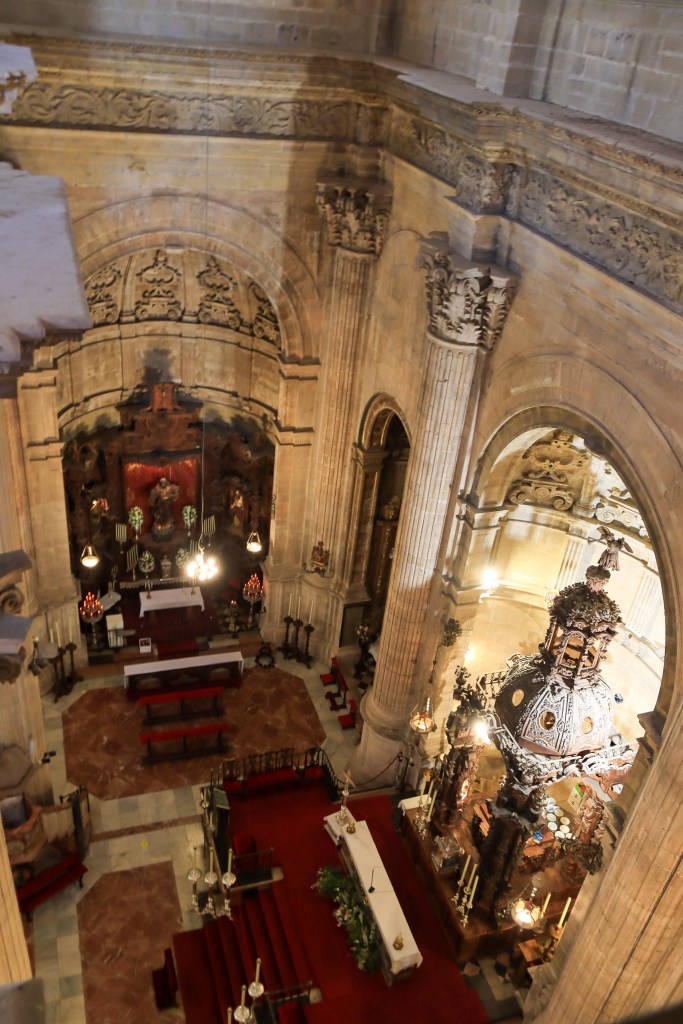
There was a small door with a sign that said ‘Open’. It led to a very narrow walkway inside the ceiling. It was an awful long way down and a very different perspective on the church.
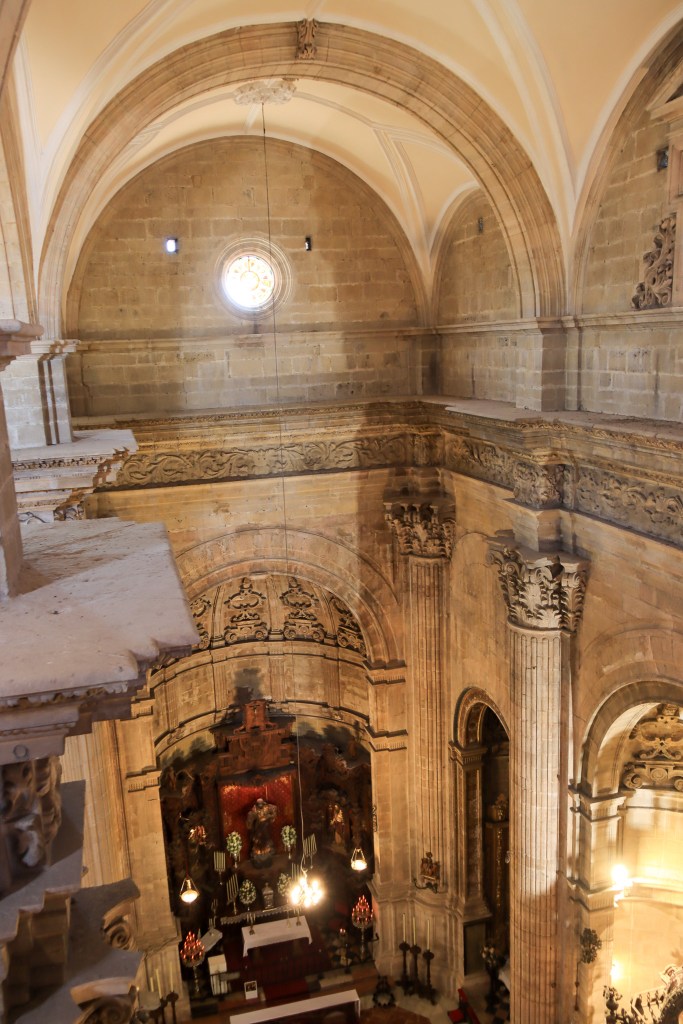
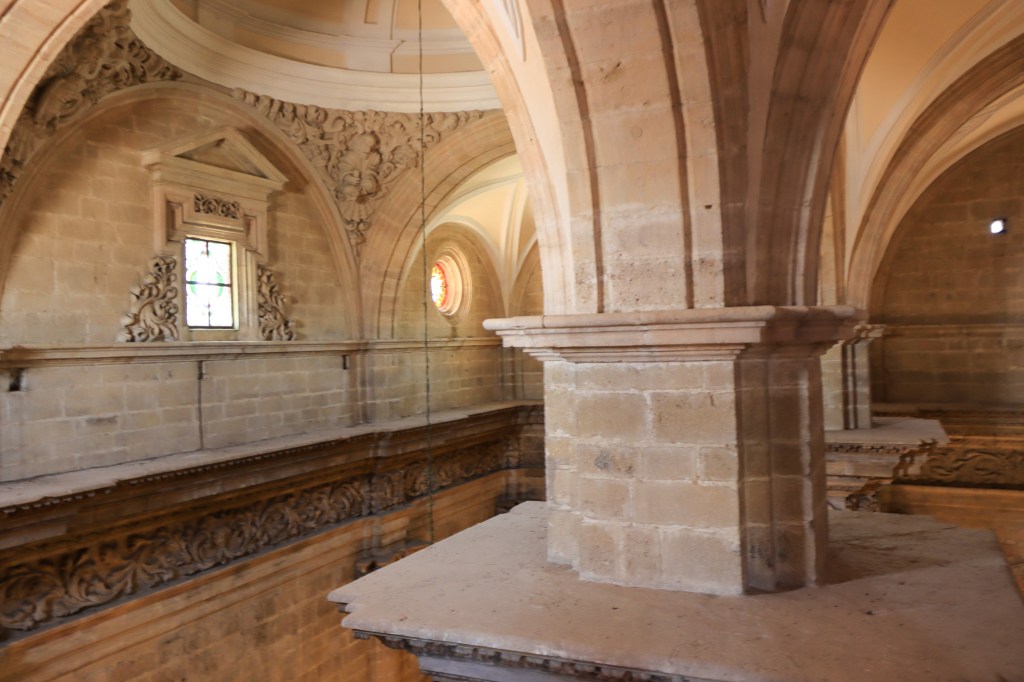
The ceiling from close quarters.
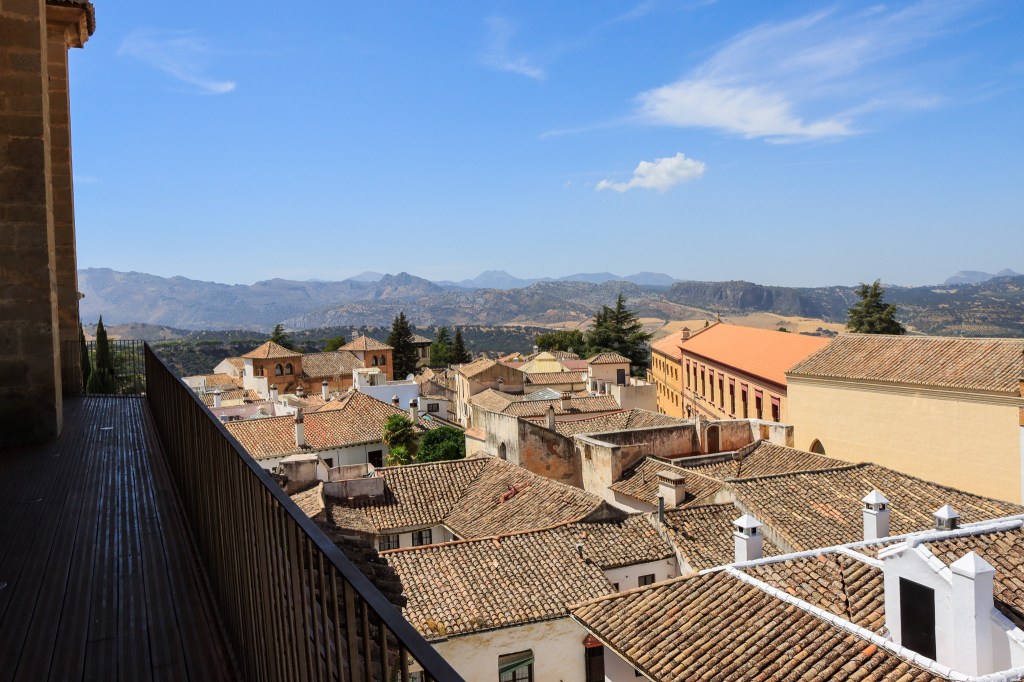
That’s the upper deck.
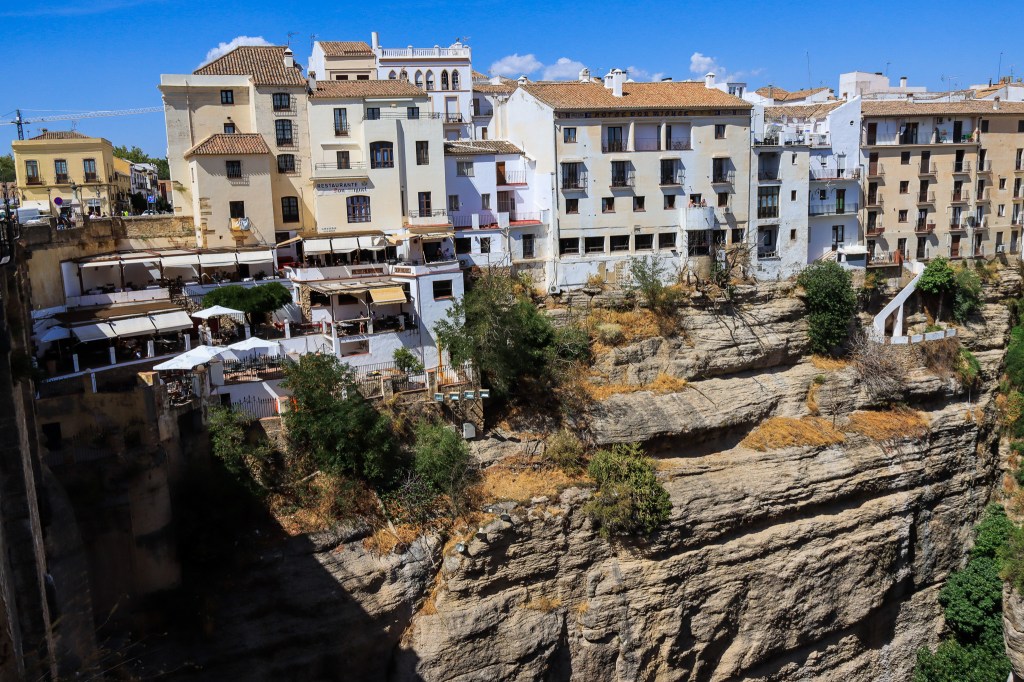
These people really know how to live on the edge.
Ronda really is a beautiful town with a lot more to see and do. We would stay another day but the heat and the night time endless festival is driving us to the beach tomorrow. But this is a town to come back to.
David & Collette

